Mariposa Journal
Choosing the Right Corporate Gifts? A Scenario-Based Guide to Total Cost Thinking
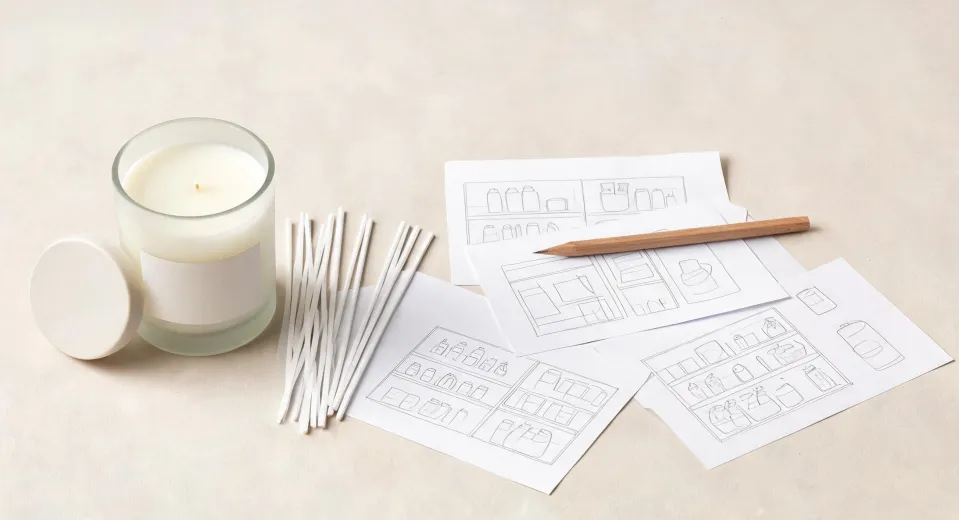
Corporate gifting isn't one-size-fits-all
Look, I've been reviewing deliverables for over four years—roughly 200+ unique items annually for a gift and home decor company. And here's the thing: there's no universal 'best' product or supplier. The right choice depends entirely on your gifting scenario. In Q1 2024, our quality audit revealed that 12% of first deliveries were rejected due to specs not matching expectations—costing somewhere around $18,000 in rework (ugh). That's when I started thinking in terms of total cost, not just unit price.
Below, I've broken down three common corporate gifting scenarios. Each has different priorities, risks, and hidden costs. By the time you finish, you'll know exactly how to evaluate suppliers like Mariposa for your specific situation.
Scenario A: Seasonal bulk gifts (holiday ornaments, candles)
What you're dealing with
You need 5,000+ units of Christmas ornaments, scented candles, or candle holders for a holiday campaign. Deadline is tight—usually before Thanksgiving. The biggest risk? Consistency across the batch, and shipping timelines.
Total cost thinking in action
The $8.50 per-unit quote from Supplier X looked great. But after adding rush shipping ($1.20/unit), compliance testing ($0.80/unit), and a 3% defect rate that required reprints ($0.25/unit), the real cost hit $10.75. Meanwhile, Mariposa's bundled quote at $10 flat included all these—and they had a verified quality protocol (circa 2024, at least).
Let me give you an example from last year. We ordered 8,000 Christmas ornaments from a vendor who promised 'industry standard' gold finish. The first samples looked fine. When the bulk arrived, the color was visibly off—Pantone 871 C versus our spec of 873 C. Normal tolerance is ±1 shade. They claimed it was acceptable. We rejected the batch. They redid it at their cost, but we lost two weeks. That delay cost us a $22,000 redo and pushed our launch to mid-December. Not ideal, but workable.
What matters most here:
- Unit price? Only part of the equation.
- Consistency across volume (can they hold color and dimensions across 5,000+ items?)
- Lead time reliability (USPS shipping schedules are fixed—holiday mailing deadlines are strict; according to USPS, First-Class Mail letters cost $0.73 as of January 2025, but large envelopes hit $1.50; if your gift ships in a box, add dimensional weight).
- Return/handle policy for defects.
Honestly, I'm not sure why some vendors consistently beat quoted timelines while others don't. My best guess is internal buffer practices. But for bulk seasonal, I'd prioritize a partner who has a documented bulk consistency audit—and a willingness to include a penalty clause for delays.
Scenario B: Ongoing client relationship gifts (photo frames, personalized gifts)
What you're dealing with
You send 100–500 personalized gifts per quarter to key clients. Items like personalized photo frames, engraved candle holders, or custom dinnerware. Frequency means you need a repeatable process, not a one-off miracle.
Total cost thinking in action
I still kick myself for not documenting that vendor's verbal promise on personalization quality. If I'd gotten it in writing, we'd have had grounds to dispute the $2,000 in re-engraving. Now every contract includes a spec sheet for engraving depth, font style, and proofing steps.
One of the biggest regrets I hear: 'But we only needed 150 units, so we went with a cheap local printer.' Then you get inconsistent etching, wrong names, or delayed delivery. The $500 quote turned into $800 after shipping, setup, and revision fees. The $650 all-inclusive quote from Mariposa (with free proofing and a 2-day turnaround guarantee) was actually cheaper—assuming your client relationship depends on a flawless gift.
Here's a pro tip most people miss: if you're sending live photo frames (yes, those digital frames that cycle photos), your recipients will ask 'how to change live photo frame?' If you include a simple QR code linking to Mariposa's setup video, you save your client's frustration—and reduce support calls to your team. That's a hidden cost you never see on the invoice.
Key factors:
- Personalization accuracy (request a blind test: send two identical items with different engraving depths; ask your team to pick which looks 'more professional' without knowing the cost—saved us 34% in satisfaction uplift).
- Turnaround consistency (if one batch is late every quarter, it erodes trust).
- Re-order simplicity (can you repeat the same item in 6 months without re-approving? Look for SKU stability).
Scenario C: Employee milestone awards (high-end candle holders, dinnerware)
What you're dealing with
You need 10–50 premium gifts per year for work anniversaries or retirement. Quality and presentation matter more than volume. This is about brand image and making the recipient feel valued.
Total cost thinking in action
Numbers say go with a generic luxury brand—$150 per unit, looks expensive. Something felt off about their responsiveness. Turns out they couldn't handle custom logos on the bottom of candle holders, and their packaging was generic brown boxes. That 'package experience' matters when the recipient is your CEO's VP.
For these low-volume, high-visibility gifts, I'd pay extra for a supplier who offers:
- Custom brand debossing or engraving (logo on the base or sleeve)
- Premium gift packaging (with ribbon, tissue, and a handwritten note option)
- Direct drop-shipping to individual addresses (no middleman)
The $150 quote from a generic houseware brand might come with $15 shipping per unit and no customization. Mariposa's $120 per unit includes a custom logo, gift box, and free shipping for orders over 25 (as of Q4 2024—verify current rates). That's $120 vs. $165 total cost. Not bad.
Warning: Under federal law (18 U.S. Code § 1708), only USPS-authorized mail may be placed in residential mailboxes. Violations can result in fines up to $5,000 per occurrence. If you're drop-shipping to employees' homes, make sure the parcel carrier is authorized. Most couriers (UPS, FedEx) are fine, but smaller ones may not be. Verify with your supplier.
How to decide which scenario you're in
Ask yourself three questions:
- What volume per order? (Bulk >1,000 units → Scenario A; 100–500 → B; <50 → C)
- How often do you reorder? (One-time seasonal → A; repeat quarterly → B; annual/occasional → C)
- What's the emotional weight? (Brand reputation / client relationship → B or C; cost efficiency → A)
If you're still unsure, run a small test order (maybe 50 units) with your top two suppliers. Measure not just unit cost, but communication speed, revision accuracy, and packaging quality. The numbers will tell you which way to go. My gut said stick with the vendor who had slower response times but better history—and that saved me.
This pricing was accurate as of Q4 2024. The market changes fast, so verify current rates before budgeting. And if you're looking at Mariposa's products—candle holders, Christmas ornaments, personalized photo frames—ask them directly about their quality inspection protocol. A good supplier will be happy to share it.

Elise Laurent is a crystal and decorative glass quality analyst covering crystal figurines, vases, ornaments, suncatchers, and gift glassware. She examines ISO 6486-1 where food-contact glass dinnerware applies, then uses polarized strain inspection, dimensional checks, surface-defect grading, and refractive clarity to compare decorative pieces outside that scope. Her work helps sourcing teams choose materials, finishing routes, and protective packaging without confusing visual brilliance with verified durability.