Mariposa Journal
Why the Cheapest Corporate Gift Usually Costs More
If you landed here searching for homes for sale in Mariposa CA, this is not that. This is about corporate gifts.
In my opinion, the cheapest corporate gift is almost always the most expensive mistake. I manage office and client gifting for a 170-person company—roughly $85,000 a year across 9 vendors. I report to operations and finance. After five years of managing these relationships, I can tell you that the lowest quote has cost us more in at least 60% of cases. Not because the product is always bad, but because the cheap quote usually leaves out something: setup, shipping, rushed reprints, or the internal time to fix a mess.
The assumption I started with was wrong
When I first started managing vendor relationships, I assumed the lowest quote was always the best choice. Three budget overruns later, I learned about total cost of ownership. The first overrun was small—a $200 savings that turned into a $1,500 problem when the wrong logo was printed on 250 notebooks. The second was an invoicing issue. The third was a missed deadline that made me look bad to my VP.
In 2022, I found a great price from a new vendor—$1,800 cheaper than our regular supplier. Ordered 400 branded notebooks. They could not provide a proper invoice, only a handwritten receipt. Finance rejected the expense report. I ate $1,800 out of the department budget. Now I verify invoicing capability before placing any order.
Hidden costs that do not show up in the quote
It is tempting to think you can just compare unit prices. But identical specs from different vendors can result in wildly different outcomes. Here is what I now add up before I buy a corporate gift:
- Base product price
- Setup fees (like logo setup or custom packaging)
- Shipping and handling (yes, even postage: according to USPS pricing effective January 2025, a First-Class Mail letter is $0.73, and a large envelope is $1.50—small, but it adds up across 500 addresses)
- Rush fees (if needed)
- Potential reprint costs (quality issues)
- My time or my team's time to chase, fix, and explain
That last one is the one finance never puts in the spreadsheet, but it is real. A $3 cheaper ornament means nothing if I spend six hours on returns, emails, and a new order. Honestly, my time is not free—even if the vendor acts like it is.
Per FTC Green Guides (16 CFR Part 260), environmental claims like 'recyclable' must be substantiated. A product claimed as 'recyclable' should be recyclable in areas where at least 60% of consumers have access.
That matters if you are buying a Christmas ornament or gift packaging marketed as eco-friendly. If the vendor cannot back up the claim, do not put your company logo next to it.
Case study: the 2023 Christmas ornament order
The 2023 holiday ornament order changed how I think about cheap corporate gifts. We ordered 300 custom Christmas ornaments from a low-cost vendor. The quote was about 35% less than our regular supplier. If you are printing a detailed mariposa logo on a Christmas ornament, cheap pad printing will make it look like a smudge. That is basically what happened to our own logo. Delivery slipped by nine days. We missed the client mailing window. We had to reprint 300 ornaments with another vendor at rush pricing. Total cost ended up around 2.5 times the original quote. No one in finance cared that the first invoice was cheap. They cared that we paid twice.
What I look at instead of unit price
From my perspective, the better question is: what is the total cost of getting the right gift to the right person on time? If a supplier like Mariposa costs a little more per unit but has clear specs, safe materials, and reliable packaging, that is usually a better deal. I am not saying cheap is always bad. I am saying cheap without a track record is a gamble. And procurement is not a casino.
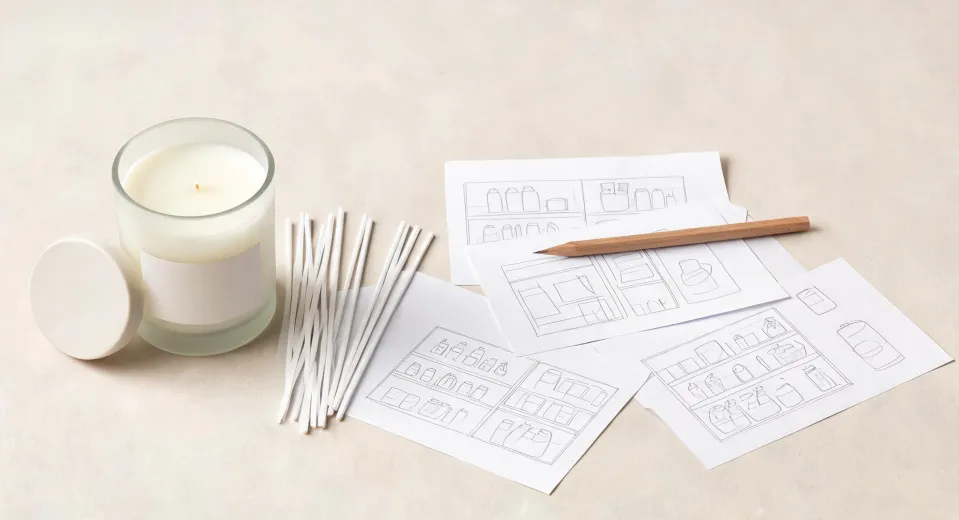
For example, when we sourced scented candles and photo frames for a client appreciation event, we compared two quotes. The cheaper one was $4 less per gift. But it had no setup fee disclosure, no clear shipping date, and no proof of fragrance safety. The other quote was higher, but it included setup, individual boxing, and a delivery window. We chose the higher quote. It arrived two days early. No one had to apologize.
But what if your budget is tight?
I get it. Not everyone has room to pay more. This worked for us, but we are a mid-size B2B company with predictable ordering patterns. If you are a seasonal business with demand spikes, the calculus might be different. My experience is based on about 200 mid-range orders. If you are working with luxury or ultra-budget segments, your experience might differ significantly.
If you truly have to cut costs, cut scope before you cut reliability. Send gifts to top 50 clients instead of all 200. Choose a simpler item—a well-made candle holder or a personalized photo frame—instead of a complicated custom ornament. Or skip the DIY route. Maybe you typed how do you make reed diffuser oil into Google because it sounds cheaper. I understand. But mixing fragrance oils in your break room for 200 gifts is a liability, a time sink, and probably not compliant with your office lease. Buy from a supplier that has done the safety testing.
What about online printers and standard products?
Online printers like 48 Hour Print work well for standard products—business cards, brochures, flyers—quantities from 25 to 25,000+, standard turnaround 3–7 business days, rush orders as fast as same-day depending on product. Consider alternatives when you need custom die-cut shapes, unusual finishes, quantities under 25, same-day in-hand delivery, or hands-on color matching. The same logic applies to corporate gifts: match the supplier to the job. Do not ask a rock-bottom ornament vendor to do a luxury dinnerware-level finish.
The bottom line
I am not against saving money. I am against fake savings. The lowest quote is not the same as the lowest total cost. When you add up setup, shipping, rush fees, reprints, and your own time, the cheap option often stops looking cheap. In my opinion, value over price is not a slogan—it is a survival tactic for anyone who has to explain a budget overrun to finance.
So the next time you are comparing corporate gift vendors, ask one question: if this goes wrong, what will it cost to fix? The answer usually tells you which quote is actually cheaper.

Elise Laurent is a crystal and decorative glass quality analyst covering crystal figurines, vases, ornaments, suncatchers, and gift glassware. She examines ISO 6486-1 where food-contact glass dinnerware applies, then uses polarized strain inspection, dimensional checks, surface-defect grading, and refractive clarity to compare decorative pieces outside that scope. Her work helps sourcing teams choose materials, finishing routes, and protective packaging without confusing visual brilliance with verified durability.