Mariposa Journal
How Do You Make a Good Photo Book? A Last-Minute Gift Story from Mariposa
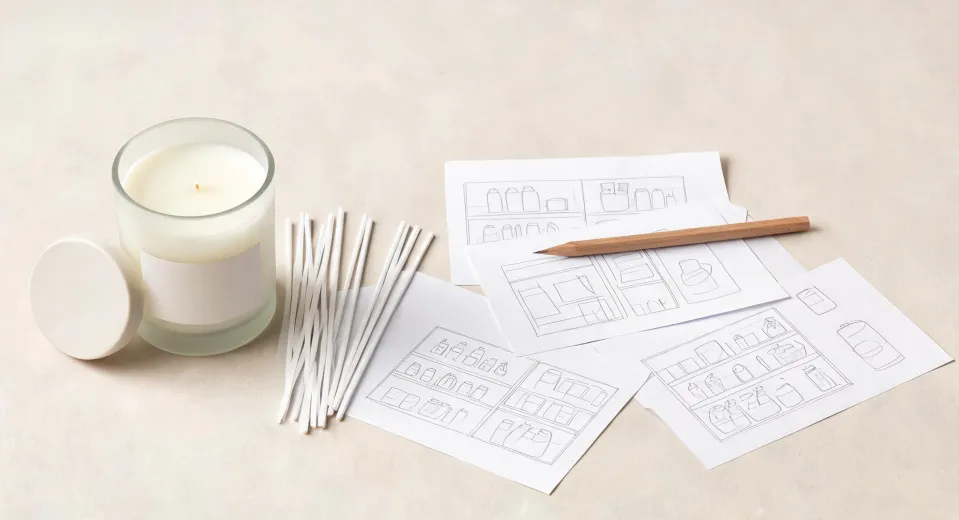
If you've searched for “homes for rent mariposa ca” or “Mariposa Apartment Homes at Western Heights,” you might be in the wrong place. I work at the other Mariposa: the gift company, not the apartment community. We make and source candle holders, scented candles, dinnerware, photo frames, and holiday decor like nativity sets. This is a story about a corporate order that started with a candle holder and ended with a question I hear more than I expected: “How do you make a good photo book?”
It started as a routine rush order
Last December, a buyer at a property-management company called me about an owner-appreciation dinner. She needed 40 engraved candle holders as table gifts. She also wanted a hand-finished nativity set for the lobby display. That part was doable. Then she said the line that changed my week.
“And do you know how to make a good photo book? We need 40 copies by Thursday.”
The event was 36 hours away. Normally, a 16-page photo book takes at least a week. But we had a relationship with a local press, and the pages were simple—mostly photos, short captions, and a welcome note from the CEO. So I said yes. That was the easy part.
The photo book is not a candle holder
I think people make this mistake because both feel like custom products. But a candle holder can be inspected before it goes out. You can check the engraving, feel the finish, and pull a replacement from the warehouse. A photo book has a different problem. Once it prints, every image is set. If the file is low resolution, no printer can fix it.
Our designer laid out the first draft with the client's photos. On a phone screen, the photos looked fine. Then our prepress person opened the biggest image at 100% and called me over. Two of the key renovation photos were from the company's website, not from the original camera files. They were about 800 pixels wide. The layout wanted them nearly full-page.
Commercial print standard is at least 300 DPI at final size. At 300 DPI, a 3000 × 2000 pixel photo prints about 10 × 6.7 inches. An 800-pixel-wide website image enlarged to 8 inches wide gives you about 100 DPI. It might still look acceptable on social media. It won't look acceptable in a printed book.
The client asked, “Can't you just sharpen it?” No. If the pixel information isn't there, sharpening only creates a crisp version of the blur. I didn't want to explain that in a lecture, so I made a test print.
The side-by-side test did the teaching
I printed the same photo two ways: one from the original file, one from the website screenshot. Both were set to the same size, side by side on an 11 × 17 proof sheet. The original had sharp edges in the window frames and texture in the painted siding. The website version looked like a fog bank had moved in. When I put them next to each other, the client didn't argue. She said, “I see the difference.”
That moment fixed the project. We found the original camera file for one of the missing photos. For the other, we redesigned the spread so that the image sat smaller on the page. We also made a rule for that book: nothing under 300 DPI at final placed size. The design got simpler, but it also got sharper.
What actually makes a good photo book
People ask “how do you make a good photo book?” as if it's about software templates or print finishes. It isn't. A good photo book starts with original image files and one clear story. In this client's case, the story was not “every project we did this year.” It was “renovation gives older homes a second life.” Once we cut the photos that didn't serve that story, the book had room to breathe.
If I had to put my best lesson in one sentence: choose images for the printed page, not for the web. A photo that looks sharp on a phone is not automatically sharp on paper. Ask for originals, check the pixel dimensions, and design around the images that can actually carry the story.
Back to the candle holder and nativity set
The candle holders and nativity set were packed and delivered the same morning. But the photo book was the reason I couldn't sleep. It went out with a courier at 3:52 p.m. on Thursday. There is something satisfying about holding a printed page that finally has enough pixels to look real.
I still kick myself for not asking about the source files earlier. “Do you have the originals?” is now my first question for any photo book, no matter how fast the deadline. It saves hours and, once in a while, it saves a client from a very expensive stack of soft prints.
Bottom line: A photo book is only as good as its files. The candle holder can be polished. The nativity set can be repainted. A bad print can't be fixed after the press run. Get the original files before you quote the deadline.

Elise Laurent is a crystal and decorative glass quality analyst covering crystal figurines, vases, ornaments, suncatchers, and gift glassware. She examines ISO 6486-1 where food-contact glass dinnerware applies, then uses polarized strain inspection, dimensional checks, surface-defect grading, and refractive clarity to compare decorative pieces outside that scope. Her work helps sourcing teams choose materials, finishing routes, and protective packaging without confusing visual brilliance with verified durability.