Mariposa Journal
That $2,400 Candle Mistake: A Procurement Story About Assumptions, Wooden Wicks, and Search Chaos
That Time I Almost Blamed the Wrong Company for My Own Mistake
September 2023. I was three coffees deep, staring at a Google results page that made zero sense.
I'd just been handed our firm's Q4 client gifting project—300 gifts, custom packaging, delivered before Thanksgiving. Not a huge order by most standards, but these were our top clients. The ones who renew six-figure contracts. The ones who notice details.
I typed mariposa into the search bar, expecting to land on the gift brand's home page. Instead, I got pages of real estate. Listings for homes for sale in Mariposa, CA. Photos of the Mariposa Apartment Homes at Reed Road. A funeral home directory, for reasons I still don't fully understand. Not exactly the curated, elegant gift-sourcing experience I was looking for.
Lesson one, learned the hard way: when your brand name collides with a geographic location, search is a minefield. I eventually found the right mariposa—the one with the home decor and home fragrance catalog—but not before wasting a solid hour and briefly wondering if I'd hallucinated the entire brand.
The Candle That Wouldn't Light
Once I found the actual product catalog, the decision was easy. Elegant home decor, clean design, a range that felt premium without being flashy. I ordered 300 wooden wick candles in their signature vessel.
That was my second mistake. I assumed wooden wick candles were... self-explanatory. Wood is wood. You light it, it burns. Right?
Wrong. So very wrong.
Two weeks before the gifts were scheduled to ship, I lit a sample candle in our conference room. Trimmed the wick to about a quarter inch—same as I'd done with cotton wicks my whole life—and struck a match. The flame sputtered, caught for a second, then died. I tried again. Same result. By the third attempt, my confidence was somewhere near the floor.
I called the vendor. The person on the phone was patient with me. Almost too patient. "Wooden wicks need different care," she said. "You can't trim them the same way. And you have to hold the flame longer at the start. The first burn matters more than you'd think."
I'm not a candle maker, so I can't explain the physics of how wax interacts with a wood wick versus a cotton one. That's outside my expertise. But what I can tell you—from a procurement and client relations standpoint—is that a candle that won't light on the first try is a return waiting to happen.
So glad I tested that sample before shipping. If I'd waited until the gifts went out, I'd have been dealing with 300 complaints instead of 15.
The $2,400 Question
I had a decision to make: stick with the wooden wick candles and trust that our clients would figure it out, or switch to something more foolproof.
I went with the candles. I believed in the product. But I made one addition.
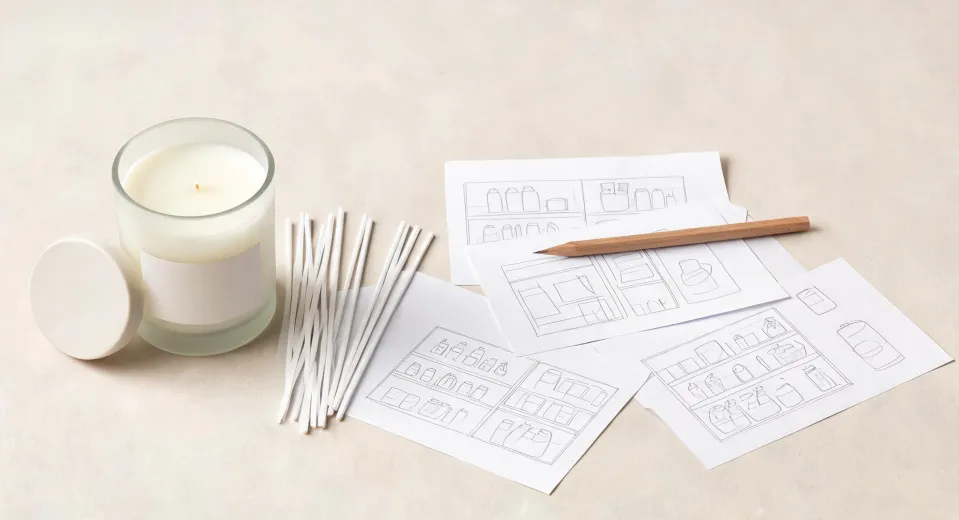
Instead of just shipping the candle in its box, I had a small card printed and tucked into each gift. The card said, simply: "Your wooden wick candle needs a little extra love. Before lighting, trim the wick to 1/8 inch. Hold the flame at the base for 10–15 seconds. Let it burn for at least 30 minutes the first time."
I didn't think much of it. Maybe $40 to print 300 cards. Barely worth mentioning.
Then the responses started coming in.
What Actually Happened
About 85% of the responses were positive. Clients loved the candle. Loved the packaging. One person asked where we got them.
But about 15%—roughly 45 people—had questions.
"How do you light a wooden wick candle?"
"The candle in the gift box won't stay lit."
"Is this supposed to work like a regular candle?"
Every single one of those people had thrown away the instruction card. Or never saw it. Or skimmed past it because who reads a card in a gift box, right?
I spent the next week fielding emails and calls. A few clients had already given up on the candle entirely—they'd tossed it or stuffed it in a drawer. That's 15 gifts out of 300 that ended up in the trash. Not because the product was bad. Because I assumed people would know how to use it.
Per FTC advertising guidelines, product descriptions need to be truthful and not misleading. A candle marketed as a ready-to-enjoy gift that actually requires specific technique to light falls into a gray area. Not illegal. But not great either.
I replaced every single one of those gifts. Replaced the candles, reprinted the cards, re-shipped. Counting the replacement units, the rush shipping, and the time I spent on customer service, that mistake cost roughly $2,400. Plus a small but noticeable hit to my credibility with the partners who'd trusted me with this project.
What I Do Now (Every Single Time)
I've been running corporate gifting orders for six years. I've made my share of mistakes—this wasn't the first, and it wasn't the last. But this one stuck with me because it was so preventable.
If I could go back and redo that project, here's what I'd change:
- I'd test the product before ordering 300 units. Not just open the box and look at it. Actually use it. Light the candle. Try the thing. A $30 sample would have saved me $2,400.
- I'd lean on the vendor's expertise earlier. The woman who answered my call knew exactly what I was doing wrong. She'd probably answered that question a hundred times. I should have asked before placing the order, not after.
- I'd assume zero product knowledge. People don't read instructions. I know that. I knew that. And I still assumed they would. Now every gift we send includes a one-page "How to Use This" card. For candles, for diffusers, for anything that isn't immediately obvious. It's not condescending—it's considerate.
The Fundamentals Haven't Changed
Here's the thing about gifting: the channel has evolved. Paper catalogs to online ordering. Handwritten notes to QR codes linking to personalized messages. Sourcing has transformed, delivery has transformed, customer expectations have transformed.
But the fundamentals? Those haven't changed at all.
People still want to feel considered. They still appreciate things that are beautiful and useful. And they still—still—will not read instructions unless you make them impossible to miss.
I used to think the hard part of corporate gifting was finding the right product. Now I know better. The hard part is anticipating every way your best-laid plan could go sideways—and building a small, cheap safeguard to prevent it.
The way I see it, the extra work upfront is always worth it. For me, that safeguard is a printed card that costs less than fifteen cents. It says, "Trim to 1/8 inch. Hold the flame at the base for 10–15 seconds. Let it burn for 30 minutes."
Simple. Obvious. Worth every penny.

Elise Laurent is a crystal and decorative glass quality analyst covering crystal figurines, vases, ornaments, suncatchers, and gift glassware. She examines ISO 6486-1 where food-contact glass dinnerware applies, then uses polarized strain inspection, dimensional checks, surface-defect grading, and refractive clarity to compare decorative pieces outside that scope. Her work helps sourcing teams choose materials, finishing routes, and protective packaging without confusing visual brilliance with verified durability.