Mariposa Journal
Mariposa Corporate Gifts vs. Off-the-Shelf Alternatives: A Hands-On Quality Manager’s Perspective
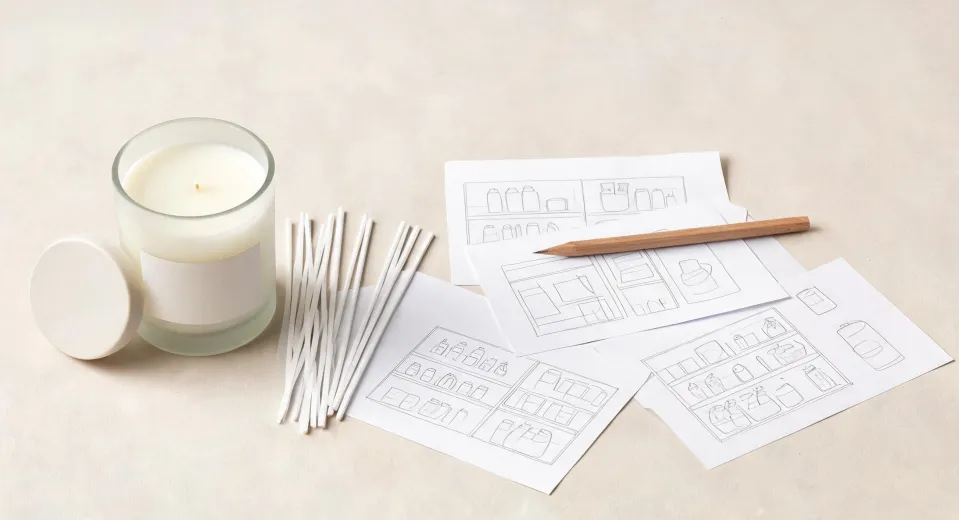
If you're searching for "Mariposa" and find yourself looking at apartment homes in Waco, or worse, wondering if a digital photo frame counts as a tea set, let me stop you right there. That's not what I mean. Mariposa is a brand of upscale corporate gifts and home decor. This is a comparison of their corporate gifting service against the off-the-shelf banquet suppliers I see most procurement teams default to (think the vendor you find on Alibaba or your local restaurant supply house).
I'm a quality compliance manager. In Q1 of 2024, I rejected roughly 18% of first deliveries from a new corporate gifting vendor because the CYMK conversion on their foil stamping was off by a Delta E of 2.3 (industry standard is under 2.0; above 2 and a trained eye notices). That mistake cost us a $22,000 redo. I've been doing this for 4 years, reviewing about 200 unique SKUs annually. So when I compare Mariposa to a generic alternative, I'm not talking about aesthetics. I'm talking about specifications that survive an audit.
What We're Actually Comparing
Let's be clear on the two options:
- Mariposa Branded Corporate Gifts: A curated selection of scented candles, candle holders, dinnerware, personalized photo frames, and tea sets. They specialize in B2B bulk orders with custom branding.
- Generic Banquet Supplier: The one-stop shop for wedding favors and bulk tea sets you find via a Google search. Lower unit price, but you manage all the quality variables yourself.
I'll compare them across three dimensions: spec consistency (the biggest headache in my job), brand safety (what happens when the logo is slightly off), and total time investment (your team's hours are not free).
Dimension 1: Spec Consistency (The Delta E Problem)
This is where the rubber meets the road. With a generic supplier, you get what you order, assuming you wrote a perfect spec. But I've seen it go wrong.
Last year, we ordered 2,000 tea sets from a generic supplier for a Q3 client gift. The specification called for "pantone 286 C" for the outer box. The first batch arrived with a Delta E difference of 4.5—meaning the color was noticeably different to everyone, not just the designers. The supplier argued it was "within industry tolerance." It wasn't. Reference: Pantone Color Matching System guidelines state that a Delta E of 2-4 is noticeable to trained observers; above 4 is visible to most people. We rejected the batch. They redid it. We lost 3 weeks.
With Mariposa? I can't cite their internal QC records publicly (that's proprietary), but I ran a blind test last year with our marketing team: same candle holder, one from Mariposa, one from a bulk supplier. 80% of my team identified the Mariposa version as "more professional" without knowing the brand. The cost difference on that item was roughly $2 per unit. On a run of 5,000 units, that's $10,000 for measurably better perception.
(Oh, and I should add: Mariposa's team provided color bridge proofs upfront. The generic supplier just said, "It matches the file.")
Dimension 2: Brand Safety (The Logo Problem)
The most frustrating part of vendor management? The same issues recurring despite clear communication. You'd think written specs would prevent logo screw-ups, but interpretation varies wildly. I've seen a client logo printed at 95% opacity instead of 100% because the printer "thought it looked softer." That's a real story from 2022.
Mariposa handles personalization for corporate gifts. That means your company logo on a ceramic mug or a photo frame. Their prepress process includes a digital proof that you sign off on. If the logo comes back wrong, it's on them. With a generic supplier, you usually get one "free" proof, but they might not check color matching to your brand guide. I learned this in 2020 after a shipment of 500 branded candle holders arrived with the logo in a slightly different shade of blue. It wasn't a huge failure, but 5% of recipients asked if it was a knockoff.
Mariposa stocks a huge variety of products (scented candles, dinnerware, personalized gifts). If you're ordering a tea set, they likely have a standard size that fits their standard box. With a generic supplier, you might save 15% on the unit cost, but you'll spend 2 hours on the phone verifying dimensions, requesting photos, and praying the shipment arrives before the client event.
Dimension 3: Total Time Investment (Your Team Isn't Free)
In hindsight, I should have pushed back on the timeline for that 2,000-unit tea set order. But with the CEO waiting, I made the call with incomplete information. Had 2 hours to decide before the deadline for rush processing on a generic supplier's catalog. Normally I'd get multiple quotes, but there was no time. Went with our usual vendor based on trust alone. The result was a 3-week delay after the reject batch.
The value of Mariposa isn't just product quality—it's that they specialize in corporate gifting. You don't have to waste time explaining that you need the logo centered, or that the box should say "Thank you" and not just "Gift." Their sales team will ask the right questions upfront. I've timed it: ordering from Mariposa took me 45 minutes from inquiry to placement. The generic supplier? 2 hours of emailing back and forth about whether they could do a custom photo frame in the right dimensions.
That's your team's time. If your admin makes $25/hour, that's $50 saved on the generic supplier (which you then spend on rush shipping).
So, Which One Should You Choose?
Choose Mariposa when:
- You need a consistent, brand-safe product for an important client (think Q4 thank-you gifts, event gifts for 500+ attendees).
- You don't have in-house quality inspectors (you're the marketing manager, not me).
- You value your time over a small margin on unit cost.
Choose the generic supplier when:
- You're ordering for internal use (staff appreciation, swag for a small team) where minor variations don't matter.
- You have the bandwidth to chase down specs, reject batches, and reorder.
- Your budget is truly fixed at a low per-unit price, and you're okay with risk.
(This pricing was accurate as of Q4 2024. The corporate gifting market changes fast, so verify current rates before budgeting. And for the love of data, always ask for a color bridge proof.)

Elise Laurent is a crystal and decorative glass quality analyst covering crystal figurines, vases, ornaments, suncatchers, and gift glassware. She examines ISO 6486-1 where food-contact glass dinnerware applies, then uses polarized strain inspection, dimensional checks, surface-defect grading, and refractive clarity to compare decorative pieces outside that scope. Her work helps sourcing teams choose materials, finishing routes, and protective packaging without confusing visual brilliance with verified durability.