Mariposa Journal
Mariposa Corporate Gifts vs. Personalized Gifts: Which One Actually Works?
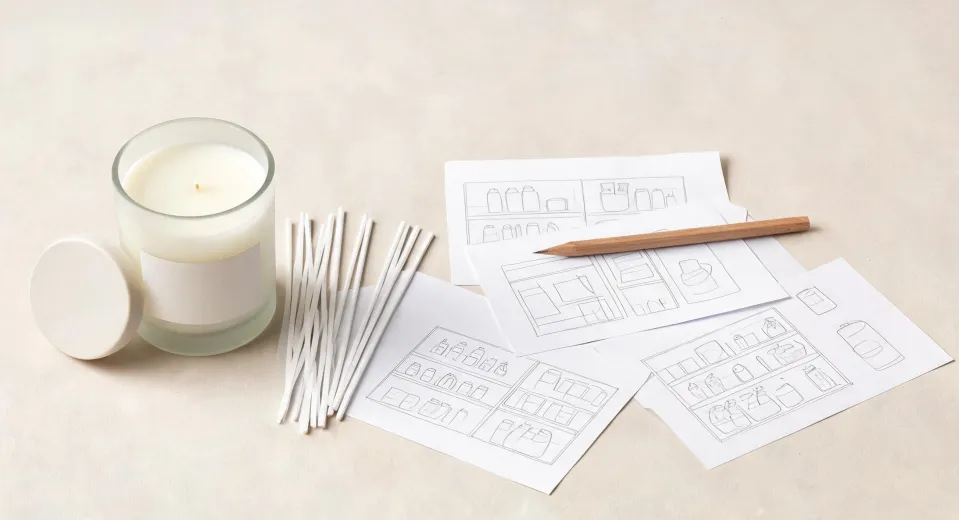
First, a search-intent note. There are a few businesses called Mariposa. If you landed here looking for Mariposa Apartment Homes at Reed Road or Mariposa Funeral Home, this article isn't about those. This Mariposa is the gift and home-decor company. I'm the quality/brand compliance manager here. I review roughly 400 orders before they ship—maybe 360, I'd have to check the system. In 2025, I've rejected about 4% of first deliveries because of color mismatch, poor print adhesion, or packaging that would embarrass us in front of a client.
This comparison isn't about my company versus anyone else. It's a decision framework for anyone buying corporate gifts. You'll see two routes: the generic bulk route and the personalized gift route. I'll compare them on three dimensions: perceived value, durability, and total cost. My bias up front: value matters more than price. What I mean is, look at the cost per recipient after reprints, returns, and lost goodwill. The lowest quote often costs way more by the time someone reorders, reprints, or apologizes to a client.
Dimension 1: Perceived Value—Cheap Looks Cheap
A corporate gift is a handshake in physical form. A pen with a logo that scratches off after a week says more than you want to say about your company. A personalized gift—say, a small photo frame with a client's name and a thoughtful note—says someone paid attention.
I ran a blind test with our account managers last year. Same budget, different execution: a generic branded mug versus a personalized glass-and-walnut frame. Without knowing the cost, 78% identified the personalized item as 'more professional.' The cost difference was $6 per piece. On a 200-unit run, that's $1,200 for a measurably better impression.
Generic bulk gifts win on speed and simplicity. Personalized gifts win on perception—if, and only if, the personalization is done well.
Dimension 2: Durability and Quality Control
I still kick myself for approving a batch of 800 mugs without checking how the logo looked after a dishwasher cycle. The first wash turned the solid white logo into a faded watermark. We caught it after the first box went to a client. That quality issue cost us a $22,000 redo and delayed a launch.
In Q1 2024, we audited 12 suppliers of corporate gifts. The cheapest option was 31% below the average quote. It also had the highest defect rate: 11% of units had misaligned printing or loose components. The second-cheapest vendor, with a defect rate of 2.1%, was only $0.40 more per unit. That $0.40 is the kind of gap people ignore until they're sorting through 90 defective mugs on a loading dock. What surprised us: the best-rated vendor wasn't the most expensive. It was the second-cheapest. Price and quality are not a clean line.
Had two hours to approve a rush order before the holiday cutoff once. Normally I'd run a burn test, but there was no time. We shipped it. The client was gracious, but they didn't reorder. In hindsight, I should have pushed back on the timeline. The cost of a delayed gift can be lower than the cost of a disappointing one.
The math is simple: a $200 savings on a low bid turned into a $1,500 problem when the client asked for replacements and we had to overnight new units. Lowest quote does not equal lowest total cost. Total cost of ownership includes setup fees, shipping, rush fees, and the quiet cost of a client who doesn't reorder.
Dimension 3: Personalization Details—And What Size Pictures Are Best for Scrapbooking
Personalized gifts fail when brands guess instead of checking details. One of the most overlooked details is photo size. So what size pictures are best for scrapbooking? It depends on the layout, but here's the ballpark we use:
- 4x6 inches: the standard. It fits most scrapbook layouts and pairs with journaling without overwhelming the page.
- 5x7 inches: best for a focal point or a one-photo page.
- 3x4 inches: great for accent shots, Polaroid-style clusters, and making a layout feel visual rather than crowded.
- 8x10 inches: best for full-page backgrounds or gatefold pages. It leaves little room for embellishment.
For a corporate gift that includes a photo or a thank-you card, a 4x6 print is a no-brainer. It's the safest size for a frame, a scrapbook page, or a desk display. A good size isn't enough, though. The resolution needs to match. A 4x6 crop from a low-resolution image will look soft when printed at 300 DPI.
Generic gifts don't require this thinking. That's their advantage. Personalized gifts require production tolerances, size choices, and a quality check on every variant. The worst personalized gift is the one where someone tried to personalize 2,000 items with zero tolerance for error. There are a ton of little decisions in the personalized route, and each one can become a quality issue.
If you're ordering standard products—business cards, brochures, flyers—online printers like 48 Hour Print work well. For custom die-cut shapes, unusual finishes, or hands-on color matching, you may need a local or specialty vendor. The point is to match the ordering method to the product. A personalized gift is not a standard product.
According to PRINTING United Alliance's 2024 industry data, the U.S. commercial printing market was approximately $85 billion. That scale tells you that print and promotional products are a serious procurement category. And in a serious procurement category, buying on price alone is a red flag.
What Should You Actually Buy?
Here's where I stop hedging.
If you need 1,000 logo pens for a trade show booth, buy the generic route. Don't overthink it. Just do a quick quality check on the imprint. If the gift is for your top 50 clients, your executive team, or someone who wrote you a big check, go personalized. The unit cost will be higher. The cost of a forgotten gift is higher still.
If you're under a deadline with no room for a sample cycle, buy standard products from a reliable printer. If you have two weeks, use the time to test materials and approve a physical proof.
Bottom line: choose based on what the gift has to do, not just what it costs. A $12 gift that gets used every day outperforms a $6 gift that ends up in a drawer by the end of the week. Put another way: a gift that lands is never the most expensive line item.
Seriously, this is the value-over-price argument in a nutshell. I've watched enough shipments to trust it. Pricing and turnaround mentioned above were accurate as of Q1 2025. The market changes fast, so verify current rates before you budget.

Elise Laurent is a crystal and decorative glass quality analyst covering crystal figurines, vases, ornaments, suncatchers, and gift glassware. She examines ISO 6486-1 where food-contact glass dinnerware applies, then uses polarized strain inspection, dimensional checks, surface-defect grading, and refractive clarity to compare decorative pieces outside that scope. Her work helps sourcing teams choose materials, finishing routes, and protective packaging without confusing visual brilliance with verified durability.