Mariposa Journal
Mariposa Gifting Guide: Reed Diffusers vs. Photo Books (and the Mistakes I’d Rather You Not Repeat)
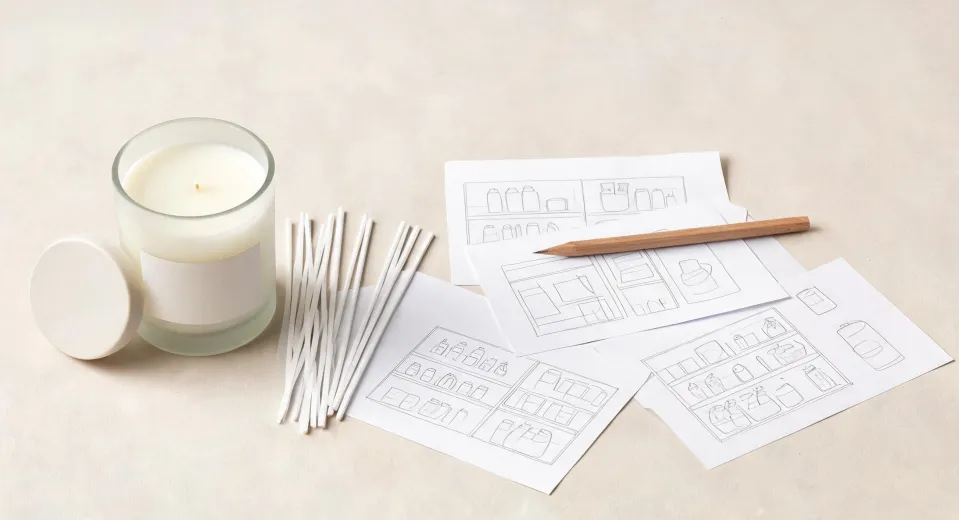
Before you ask me about candles, one housekeeping note. If you landed here after searching for “Mariposa homes for sale” or “Mariposa Funeral Home Mesa AZ,” I can’t help you with the closing costs or the obituary. I work for Mariposa, the gift company. Different corner of the internet. But if your question is “reed diffuser or photo book for a client gift?”—you’re in the right place.
I’ve been handling corporate gifting and personalized orders for nine years. I’ve personally made, and documented, fourteen significant mistakes—totaling roughly $6,800 in wasted budget. (Should mention: that number is conservative. It doesn’t include the time lost arguing with suppliers.) I keep our team’s checklist now so other people don’t repeat my errors.
There’s no single best corporate gift
If someone tells you the best corporate gift is always a reed diffuser or always a photo book, they’re selling you something. The right answer depends on who you’re buying for, how many you need, and what the gift is supposed to do. A diffuser isn’t “better” than a photo book. It’s just better in certain situations.
Most buyers focus on unit price and fragrance and completely miss lead time, packaging quality, and whether the item survives shipping. The question everyone asks is “What does it smell like?” The question they should ask is “How much oil is in the bottle, and will the glass survive a FedEx truck?”
Here’s the framework I use after a decade of ordering and messing up: three scenarios. Existing client gifts. Event or conference orders. Milestone or team gifts. Each one has a different best answer.
Scenario 1—Existing clients, small order (10–50 units)
For existing clients, you want something that says “we know you,” not “we have leftover budget.” A photo book works if you have real photos from the year: project shots, an event photo, a thank-you note page. But photo books are unforgiving. One misspelled name, one wrong date, and the whole thing looks careless.
I once approved a 20-page photo book where the client’s name was misspelled on the cover. Every copy. The reprint cost $640, and we missed the thank-you dinner we’d planned around it. That’s the kind of error that doesn’t show up in a quote.
A reed diffuser is the safer call in this scenario. It lasts two or three months, it sits on a desk where people see it, and it doesn’t require a personal photo to work. The downside is scent. It’s polarizing. A strong “ocean breeze” is a risky gift. If you go this route, pick a light citrus or a clean cotton-type scent, and keep bottle sizes generous (which, honestly, is where most budget diffusers fail).
Scenario 2—Conference or event, large order (50–500 units)
For a conference, the calculus changes. You need something that carries a brand, ships reasonably, and doesn’t require the recipient to do anything. Photo books are a bad event gift: too expensive, too personal, and too slow. Reed diffusers perform well here. A custom label on a glass bottle feels more expensive than it is, and the recipient doesn’t have to clear shelf space for another branded notebook.
But watch the hidden costs. The cheapest supplier I ever used quoted a great per-unit price for 200 candles. Then came a $150 setup fee, a separate shipping charge for the lids, and a 10% overrun policy. Once I added all of it, the “cheap” vendor was 18% more expensive than the mid-range option. People think expensive vendors deliver better quality. Actually, vendors who deliver quality can charge more. The causation runs the other way.
If you’re considering a paint-by-number kit as a conference or team-building gift, I’d usually steer you toward something less homework-like. But if you already bought the kits and want the finished piece to look better, here’s the trick: iron the canvas on low heat, face-down, stretch it over a frame, and add a white mat before framing. That one step makes a $15 kit look like a $60 art print.
Rush printing premiums: 2–3 business days is usually 25–50% over standard; next-business-day is 50–100%. Based on major online printer fee structures, January 2025. Verify current rates before ordering.
Scenario 3—Milestone or team gifts (under 20 units)
This is where photo books and personalized frames shine. When you’re celebrating a retirement, an anniversary, or a team milestone, the gift is about memory, not brand. A photo book with a meaningful cover and a handwritten note is hard to beat. So is a personalized candle holder or frame with a date that matters.
But don’t combine too many personalization options. I once ordered 15 frames with a name, a date, and a quote. Three had spelling errors, two had the wrong date format, and one had the quote cut off in production. Rework cost $520. I have mixed feelings about customization—on one hand, it feels intentional. On the other, every field is a chance for a typo. My rule: personalize one thing per item. A name and a date, or a name and a short quote. Not all three.
If you’re using a paint-by-number piece as a milestone gift, treat it like real art. The kit’s wooden frame works, but upgrading the mat and backing makes an enormous difference. Also use a hair dryer or a low-heat iron to flatten the canvas before framing. Funny enough, this is the same answer I give when people ask how to make a paint by number look better—it’s usually the frame, not the painting.
The value-over-price trap
I used to pick vendors by lowest quote. In my first year, 2017, I ordered 400 candles from the cheapest supplier I could find. The fragrance oil separated in 30 of them, and 12 arrived with cracked containers. The supplier replaced the cracked ones, but the separation required a 3-step fix on every unit. What I saved on the quote turned into a $1,430 problem. That’s when I stopped looking at unit price and started looking at total cost.
Now I use a simple formula: unit price + setup + shipping + deadline + replacement risk. I also ask every supplier two questions: “What’s your setup fee?” and “What happens if 5% arrives broken?” If the answer is anything other than “we reship at no charge,” I rethink the order.
For reference, setup fees in commercial printing usually include plate making at $15–$50 per color, digital setup at $0–$25, and die cutting at $50–$200. Many online printers include setup in the quoted price; local shops often don’t. Numbers as of January 2025—verify current pricing with your supplier.
How to know which scenario you’re in
Ask yourself two questions. First: does the gift need to carry a brand? If yes, go with a reed diffuser or a candle with a clean custom label. Second: do you have enough real memory to fill a photo book? If not, don’t force it. A photo book full of stock images is worse than one full of real photos.
- Existing clients, under 50 units: Reed diffuser if you want safe and useful; photo book if you have real photos and time to proof twice.
- Event or conference, 50+ units: Reed diffuser or candle. Skip photo books.
- Milestone or team, under 20 units: Photo book or personalized home decor—with one personalization field per item.
A checklist you can steal
I’ve caught 47 potential errors with this checklist in the past 18 months. It’s not fancy, but it works.
- Get a digital proof for anything with names, dates, or logos.
- Check names and dates against the original source document, not the spreadsheet you made at 11 p.m.
- Calculate total cost, not per-unit cost. Add setup, shipping, rush fees, and tax.
- Order one sample before the full run. For photo books, this is non-negotiable.
- Ask about breakage and reprint policy. If they don’t cover defective items, the savings won’t last.
If I remember correctly, our first “cheapest” supplier also had a 7-day lead time that turned into 14. That delay cost us more than the savings ever did. (Ugh.) Learn from that mistake. And if you still need to figure out which Mariposa you’re dealing with—homes, funeral home, or gifts—this is the gifts one. Happy ordering.

Elise Laurent is a crystal and decorative glass quality analyst covering crystal figurines, vases, ornaments, suncatchers, and gift glassware. She examines ISO 6486-1 where food-contact glass dinnerware applies, then uses polarized strain inspection, dimensional checks, surface-defect grading, and refractive clarity to compare decorative pieces outside that scope. Her work helps sourcing teams choose materials, finishing routes, and protective packaging without confusing visual brilliance with verified durability.