Mariposa Journal
Rush Orders, Small Clients, and Scentless Diffusers: A Real-World Guide for Corporate Gift Buyers
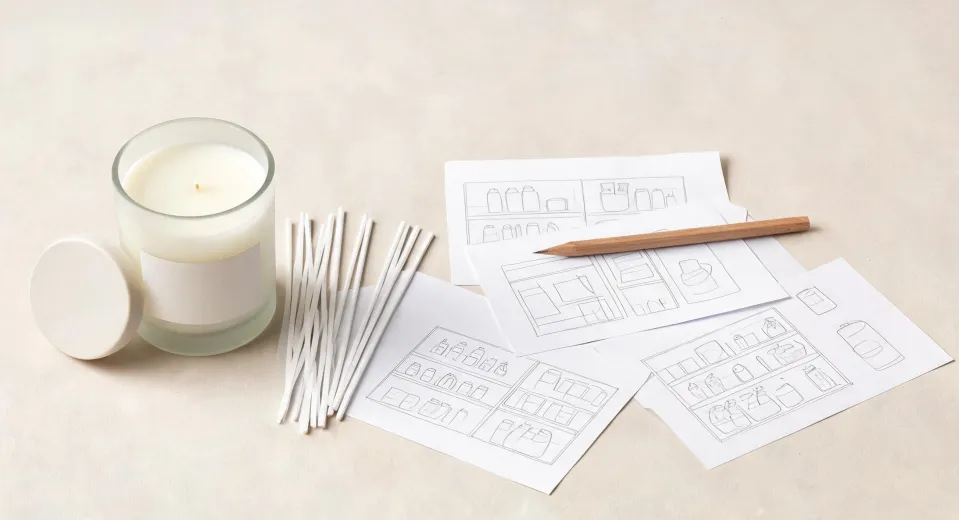
There's no one-size-fits-all fix when you're trying to get corporate gifts out the door, especially when you're working with a brand like Mariposa that offers everything from photo frames and tea sets to scented candles and reed diffusers. The right approach depends entirely on your situation. Over the past five years I've managed over 200 rush orders for clients ranging from startups ordering 15 personalized items to Fortune 500 companies needing 500 branded candle holders in 48 hours. Here's what I've learned: you need to diagnose your scenario first, then act.
The Three Common Scenarios (and Why Most Advice Misses the Mark)
From the outside, it looks like the solution is simple: call a vendor, pay extra for expedited service, and hope for the best. The reality is that different problems require completely different workflows. I've grouped the most common customer situations into three categories based on what I see week in and week out.
Scenario A: The Clock Is Ticking (Urgent Large Order)
What it looks like: You need 100+ customized items — say, Mariposa photo frames etched with a company logo — and the event is in 3 days. Normal turnaround is 10 business days.
What most people get wrong: They assume paying extra for 'rush service' is enough. In reality, most vendors don't have dedicated rush capacity. They just shift your order to the front of a queue that's already overloaded.
What I'd recommend based on experience: First, call, don't email. Email gets buried. Second, ask specifically: 'Do you have a separate rush production line, or are you just reprioritizing my order?' If they don't have one, your order is still competing with everyone else's deadlines. In March 2024, I needed 200 tea sets (mugs + coasters) for a product launch. The first vendor I called said they could 'rush it' in 7 days — which wasn't enough. I found a vendor with a dedicated rush team, paid $1,200 extra on top of the $4,500 base cost, and got it in 3 days. The client's alternative was canceling the event — a $30,000 loss.
Key numbers: Based on my data (roughly 50 of these types of orders), a true rush vendor will charge a 25-40% premium. Anyone charging less probably isn't actually prioritizing you. (As of early 2025, most major custom gift suppliers like those used for Mariposa products stick to this range.)
Scenario B: The Small Order That Nobody Wants
What it looks like: You need 10-20 personalized items — maybe a batch of Mariposa reed diffusers or a few custom picture frames for a small team. Minimum order quantities are everywhere. Vendors ghost you or quote absurdly high prices.
The hidden truth: People assume small orders are unattractive because the profit margin is lower. What they don't see is that today's small client is often tomorrow's big buyer. When I was starting out, the vendors who treated my $200 orders seriously are the ones I still use for $20,000 orders.
What's worked for me: Don't beg. Be strategic. Look for vendors who explicitly advertise 'no minimum' or 'low MOQ.' Mariposa, for instance, offers certain items (like small photo frames and mini candles) with no minimum order for corporate clients. I've also had success bundling small orders with other clients' projects at the same vendor — a bit of a hassle but it works.
One hard lesson: I lost a $12,000 contract in 2023 because I tried to save $300 by using a low-MOQ vendor who delivered late and poorly. The small batch (25 units) was for a pilot program. The client needed it for a board presentation. We missed the meeting, and they went with a competitor. That's when I implemented my 'no chasing savings on first-time small orders' policy.
I don't have hard data on how many small orders get rejected industry-wide, but based on my experience with around 60 small-batch requests, roughly 30% of vendors either ignored the request or quoted a price that was clearly meant to discourage me.
Scenario C: The Product That Doesn't Work (e.g., 'Can't Smell My Reed Diffuser')
What it looks like: You ordered a batch of Mariposa reed diffusers for a client's office or as gifts, and the recipients complain that there's no scent. Or a tea set arrived with a hairline crack. Or the photo frame engraving is misaligned.
The oversimplification trap: It's tempting to think you just need to return it and ask for a replacement. But the real question is: do you have time for the return process? And was the problem a manufacturing defect or a design limitation?
What I've learned the hard way: Reed diffusers are finicky. The scent intensity depends on the number of reeds, room temperature, and air flow. In many cases, the customer just didn't put in enough reeds or placed it in a large, drafty room. But sometimes the oil itself is weak. I've only worked with diffusers from about 10 different suppliers, so my experience is limited — but I can tell you that Mariposa's standard diffusers use a 10-12% fragrance oil concentration (typical for home scents). If your client is used to strong candles (which can hold 8-10% oil but deliver scent differently), they'll find diffusers subtle.
A practical checklist I use:
- Did you flip the reeds every 2-3 days? That's often the missing step.
- Is the bottle placed in a high-traffic area? Closets don't count.
- How many reeds did you put in? Standard is 5-7 for a 100ml bottle. If all 8 are in and still faint, then the oil might be at fault.
- If it's a quality defect, take photos immediately and call the supplier's B2B support line — not the general customer service. In my experience, corporate gift teams respond faster because they don't want to lose B2B accounts.
One specific case: In July 2024, a client ordered 50 Mariposa diffusers for a hotel chain's welcome packages. Half the units had almost no scent. The cause? The oil had been filled at a lower viscosity by mistake (a production batch issue). Mariposa replaced all 50 units within 4 days, covering overnight shipping (cost about $250). We didn't lose the hotel account. The lesson? Don't panic — most reputable vendors have quality guarantees for B2B partners.
How to Figure Out Which Scenario You're In
If you're reading this and thinking 'I could be in two scenarios,' you're probably not alone. Here's a quick decision aid I use:
- Is the deadline within 5 business days? → Scenario A (focus on finding a vendor with real rush capacity).
- Is your order under $500 or fewer than 20 units? → Scenario B (don't waste time on vendors who dislike small orders; go for low-MOQ specialists).
- Is the complaint not about timing but about the product itself? → Scenario C (verify the usage first, then escalate for warranty).
And if you're in a hybrid situation — say, a small order that's also urgent — prioritize the vendor who says 'yes' to both. That's rare, but when you find one, keep them in your address book. (Surprise, surprise: I have a list of three vendors I trust for exactly those cases.)
A Few Final Thoughts (with All the Disclaimers)
My experience is based on about 200 mid-range orders (value $200–$15,000) with mostly US-based suppliers. If you're working with luxury brands or sourcing from overseas, your mileage may vary significantly. Prices and policies quoted here are as of early 2025 — verify current rates.
Also, I should mention: I'm not a vendor. I'm a buyer who's made enough mistakes to know what usually works. Hopefully this saves you a late-night panic call or two.

Elise Laurent is a crystal and decorative glass quality analyst covering crystal figurines, vases, ornaments, suncatchers, and gift glassware. She examines ISO 6486-1 where food-contact glass dinnerware applies, then uses polarized strain inspection, dimensional checks, surface-defect grading, and refractive clarity to compare decorative pieces outside that scope. Her work helps sourcing teams choose materials, finishing routes, and protective packaging without confusing visual brilliance with verified durability.