Mariposa Journal
Specialty Gift Companies vs. Mass-Market Retailers: A 7-Year Procurement Mistake Log
-
Two Ways to Buy Corporate Gifts
-
Dimension 1: Price Transparency—The $2,850 Order That Became $3,950
-
Dimension 2: Quality Consistency—The Logo That Wasn't Straight (On 32 of 50 Units)
-
Dimension 3: Delivery Reliability—"In Stock" Is Not "Ready to Ship"
-
When the Mass-Market Option Actually Wins
-
My Current Pre-Check (The Part I'll Share)
-
The Bottom Line
I've been handling corporate gift orders for seven years. In that time, I've personally made—and documented—23 significant mistakes, totaling roughly $18,000 in wasted budget. Now I maintain our team's pre-order checklist, so the next person doesn't re-learn all of this the hard way. This article exists because a new hire asked me a fair question last month: "Why don't we just buy from a big-box store and skip the specialty markup?"
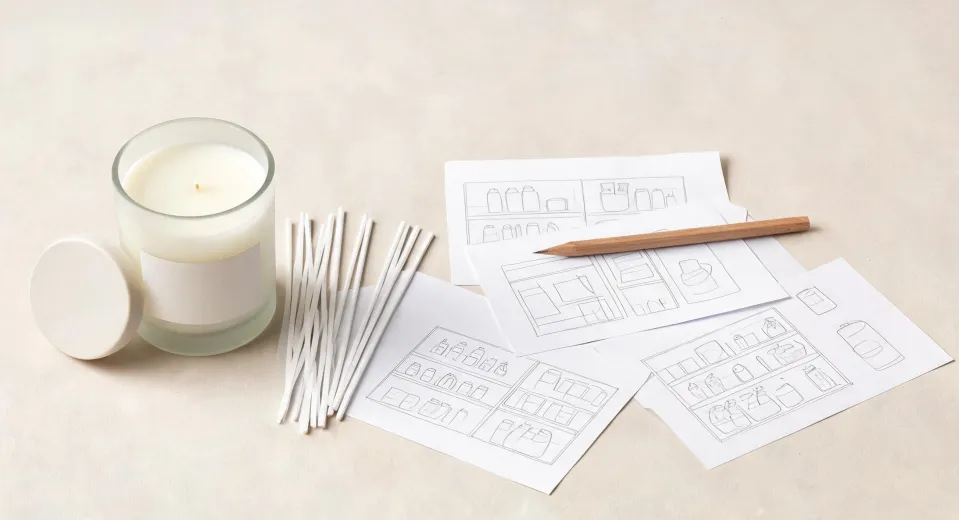
I used to buy that argument. In 2018, my first project was 50 scented candles with custom labels for a client appreciation event. I sourced them from the cheapest option I could find. Here's what that decision actually cost—not on that first order, but across every one since.
Two Ways to Buy Corporate Gifts
When you need branded gifts—candle holders, dinnerware sets, photo frames with a company logo—you have two realistic paths. One is a specialty gift company (like Mariposa) that produces and customizes the product in-house. The other is a mass-market retailer: a general store with a personalization counter, monogram machine, or online print-on-demand service bolted onto a standard product line.
At first glance, the difference looks like price. Specialty = expensive. Mass-market = cheap. After seven years and a pile of invoices, I've learned the real difference is something else: what your quote actually covers.
That's the framework I use now. Three dimensions: price transparency, quality consistency, and delivery reliability. Here's how they actually compare.
Dimension 1: Price Transparency—The $2,850 Order That Became $3,950
In September 2022, I ordered 75 dinnerware sets for a partner event. The big-box retailer quoted $38 per set. The specialty company quoted $46 per set—one line item, including packaging and personalization. I went with the cheaper quote. Or rather, I went with the quote that looked cheaper. The specialty quote was one line item. The mass-market quote was one line item, too—plus five more that appeared later on the invoice.
Here's something vendors won't tell you: the first quote from a mass-market retailer is rarely the total cost when the order involves customization. The final bill broke down like this:
- Base product: $2,850 ($38 × 75)
- Personalization setup fee: $50 one-time
- Logo print fee (the actual printing was outsourced): $4.00 per set — $300.00
- Gift box upgrade (the default box had the retailer's name on it): $6.00 per set — $450.00
- Split-shipment fee: $84
- Expedited processing (standard lead time would have missed the event): $216
Total: $3,950. That's $500 more than the "expensive" specialty quote I'd rejected two weeks earlier. Not a small gap. A real one.
Why does this happen? Because mass-market pricing is designed to look good next to base prices elsewhere. The add-ons are hidden in plain sight—or revealed after the PO is signed. The specialty company's quote was one number on one page. No surprises. Done.
Did the mass-market option look better at the start? Yes. Was it cheaper at the end? Not even close.
Dimension 2: Quality Consistency—The Logo That Wasn't Straight (On 32 of 50 Units)
Most buyers focus on per-unit pricing and completely miss the QC variable. That's a blind spot. The question everyone asks is "What's your best price?" The question they should ask is: "What happens when it's wrong?"
In my first year (2018), I ordered 50 branded candle holders from a national retailer's personalization service. The proof on my screen looked flawless. What arrived was different: the logo was slightly crooked on 32 of the 50 units. Not dramatically. Just enough that anyone handling one would notice. Our logo. On a client gift. Not ideal, not terrible—just embarrassing.
I checked one unit. Then pulled all 50 out of their boxes to confirm the extent. 32. That's the kind of number that stays with you.
The retailer agreed to redo them. The redo took three weeks, and we still paid shipping both ways. Cost: $890 in shipping and rework, plus a set of client gifts that arrived late.
Why did this happen? The personalization was done at an individual store's counter, by a staffer who was also running the register. It's a process designed for single-item purchases, not batch orders. A specialty gift company like Mariposa has a dedicated production line for bulk orders, with standardized QC. When I order 250 units now, the 37th unit matches the 128th matches the 250th. I've never had to reject an entire batch since we switched. Not once.
Quality consistency isn't a category where both sides can win. If your company name is on the product, a batch failure is a risk you're taking. Period.
Dimension 3: Delivery Reliability—"In Stock" Is Not "Ready to Ship"
The third time this bit us—the third time—I finally took it seriously. Should've done it after the first.
The product page said "in stock." To me, that meant ready to ship. To the retailer, it meant the product exists in a warehouse, somewhere, and you'd be added to a fulfillment queue.
In March 2024, I placed an order for 60 photo frames through a mass-market retailer. Delivery estimate: five business days. At day five, no confirmation. At day seven, I called. The frames were in stock, but the personalization queue was backed up because of a seasonal promotion. New ship estimate: ten more days.
The specialist company had quoted a firm seven-day turnaround. I didn't take it because it cost $2 more per unit. Yes. $2.
The structural difference: a mass-market retailer treats customization as one service among a hundred store functions. A specialist treats it as the core operation. When the specialist says seven days, that includes production and shipping. When the retailer says five days, they mean "five business days, if nothing else happens"—and in my experience, something else always happens.
I now ask a different question: "What's your promised delivery date, in writing, if I order today with this spec?" Promised dates, not estimates. If a vendor won't commit in writing, that's an answer too.
When the Mass-Market Option Actually Wins
Let me be fair. I'm not going to pretend every order belongs with a specialist.
Mass-market retailers win in three situations:
- Quantities under 10, no branding needed. A departing team member's gift or a single client thank-you. The price difference matters, and the QC risk applies to one item, not a batch.
- Same-day, in-store need. If you need a candle holder this afternoon, a local store with a decent gift section wins. Full stop.
- No customization required. If there's no logo, no personalization, no message—don't pay a specialist markup. Just buy the best product you can find.
Specialty companies win everywhere else. Since we standardized on a checklist, we've caught 47 potential errors using this checklist in the past 18 months—quote discrepancies, wrong logo files, missing packaging specs. Not one reached a client's hands. As of January 2025, we've had zero batch failures with the specialist route.
My Current Pre-Check (The Part I'll Share)
After the third delivery miss in Q1 2024, I made a pre-check list. These five questions now go to every vendor, every time:
- "What is the complete per-unit cost, including personalization, packaging, and shipping?"
- "What's NOT included in that price?"
- "If a unit arrives damaged or flawed, who owns the redo cost?"
- "What's the promised delivery date, in writing?"
- "Can I see a physical sample from a previous bulk order with the same personalization method?"
That last question matters more than people think. A digital proof can look great and still fail in real life—I know from experience. A finished batch sample shows you exactly what you'll receive.
The Bottom Line
Buying corporate gifts from a mass-market retailer isn't wrong. Buying from a specialty company like Mariposa isn't always right. But of my 23 documented mistakes, the most expensive ones all followed the same pattern: chasing a per-unit price that wasn't actually lower once everything else was added.
If I could go back to 2018 and say one thing to myself, it would be this: ask "what's not included" before you ask "what's the price."
The quote that lists everything upfront—even when the total looks higher—usually costs less in the end. That pattern has held across dinnerware, candle holders, photo frames, and every other corporate gift I've sourced. The cheapest option is rarely the cheapest. But a vendor who front-loads the real number? That's a vendor worth trusting.

Elise Laurent is a crystal and decorative glass quality analyst covering crystal figurines, vases, ornaments, suncatchers, and gift glassware. She examines ISO 6486-1 where food-contact glass dinnerware applies, then uses polarized strain inspection, dimensional checks, surface-defect grading, and refractive clarity to compare decorative pieces outside that scope. Her work helps sourcing teams choose materials, finishing routes, and protective packaging without confusing visual brilliance with verified durability.