Mariposa Journal
Votive Candles & Branded Merchandise: Why “Cheapest” Costs More (A Mariposa Procurement Perspective)
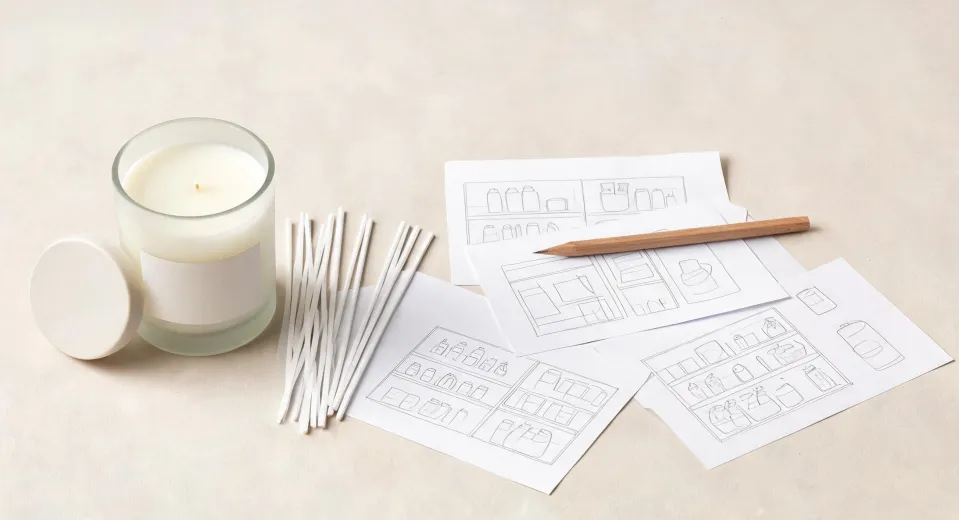
If you got here by searching for Mariposa Funeral Home Mesa AZ or Mariposa Recovery Home, you aren’t lost. You found a different Mariposa: the home décor and gifting company, not a funeral home or a recovery residence. I manage procurement at this Mariposa, and I’ve spent six years buying corporate gifts, branded merchandise, and the quiet workhorses behind them: votive candles, candle holders, packaging, and printed materials.
Here’s why I’m writing about candles on a company blog. The people who search for those other Mariposas often need exactly what I buy. A funeral home needs continuous, gentle light for services that cannot be interrupted. A recovery home needs calm spaces that don’t feel institutional. Both operate on tight budgets. Both deserve a procurement opinion that isn’t just “pick the lowest quote.”
Unit price is the least reliable number on a candle or branded-merchandise quote. What matters is the cost of a successful outcome. Those are not the same thing.
That sounds like a slogan. In my experience, it’s closer to arithmetic. Let me show you the numbers we recorded.
What a six-hour burn test taught us
In Q2 2024, we tested four candle suppliers. We didn’t do a laboratory study. We did something more practical: we burned 72 votive candles from each vendor, in identical holders, for six hours straight, and recorded which ones made it without sputtering, smoking, or drowning their own wicks.
Supplier A was the cheapest. A case of 72 votives came to $28.80—40 cents per candle. Supplier B quoted $43.20 per case, or 60 cents per candle. Both said “12-hour burn time” on the label.
Of Supplier A’s candles, 43 survived six hours cleanly. Nine showed issues before we even lit them—separated wicks, hollow pours, visible cracks. The rest either needed relighting or left an embarrassing black film on the holders.
Of Supplier B’s candles, 68 burned cleanly for six hours. One had a slight flame flutter. One arrived damaged.
Do the math on successful candles, not total candles:
- Supplier A: $28.80 ÷ 43 = $0.67 per successful candle.
- Supplier B: $43.20 ÷ 68 = $0.64 per successful candle.
The more expensive supplier was cheaper per working candle. Not by a mile, but by enough. And that calculation leaves out the coordinator who had to run around replacing flickering candles, cleaning soot, and calming a client who noticed. My sample is one mid-market buyer’s experience, not a public database. But I can tell you that when an event depends on candlelight, a candle that needs supervision isn’t a candle. It’s a liability.
The same math applies to branded merchandise
People assume branded merchandise is different from candles because it’s easier to inspect upfront. That’s true, but only if you inspect it. In Q3 2024, we quoted 680 client-gift candles with a logo treatment.
The low bid was $6 per unit: $4,080 total. A supplier we’d used before quoted $9 per unit: $6,120 total. On paper, the gap was $2,040. That’s huge for a procurement manager.
Then the low-bid order arrived. About 180 units had labels peeling already, logos applied off-center, or finish flaws visible from across a room. The supplier offered replacements in ten business days. The event was in forty-eight hours.
We sourced 180 replacements locally at $10 each, plus $300 in expedited delivery. Final cost of the “cheap” order: $4,080 + $1,800 + $300 = $6,180.
The preferred supplier’s quote would have been $6,120, and it would have arrived on schedule. Cheap didn’t save $2,040. Cheap cost $60 more than the premium supplier, plus three late nights and some very awkward internal emails.
I’ll be fair: not every discounted batch fails. But when you buy on unit price alone, you’re buying a probability. The cost of being wrong lands elsewhere on the budget. That’s why the lowest quote on branded merchandise is often the highest-cost option in your quarterly report.
What about melting candle wax to reuse it?
A lot of people search how do you melt candle wax to reuse after burning through a candle gift or a case of memorial candles. They don’t want to throw out the jars. I understand the instinct.
Full disclosure: I’m not a candle chemist or a safety engineer, so I won’t give you a formula. From a procurement perspective, the first answer isn’t temperature. It’s whether the leftover wax is worth reclaiming.
A cheap candle that sooted, flickered, and self-extinguished leaves behind wax full of carbon bits and burnt fragrance residue. Melt that down and you’ll spread the problems into your next candle. The leftover from a clean-burning candle, though, is more likely to be uniform in color and free of debris. That wax is worth a second life.
If you do try it, use a double boiler, not a pot directly on the stove. Keep the temperature low enough that the wax just melts. Never microwave the glass jar. Strain through cheesecloth or a fine mesh, remove the old wick base, and pour into a container that can handle heat. And if the leftover wax doesn’t look clean, don’t test your luck. Throw it out. A $1 candle is not worth a kitchen fire.
I can already hear the budget objection
“We don’t have the budget for premium candles. We run a small facility. Every dollar counts.” I understand. I manage a budget too. I’m not telling you to buy luxury candles. I’m telling you to stop treating the cheapest quote and the best value as the same thing.
There are cheap candles that work. There are expensive candles that disappoint. The difference isn’t the price point. The difference is whether the supplier has proven the product will do what the event actually requires.
In my own budget, the painful lessons came from skipping proof to hit a target. The “cheap” option has cost us more in roughly six out of ten decisions where we skipped testing or samples. The most frustrating part is that the warning signs were always in the quote: vague specs, no burn data, no physical sample, no delivery guarantee.
Cost per successful use, not cost per piece
Here’s the scorecard we use now before ordering candles or branded merchandise:
- Test the actual product before the event. Light it, wash it, peel at the label, drop the box. Do it before you pay a deposit.
- Calculate cost per successful unit, not cost per unit. Include expected failure rate.
- Add the cost of being late. A replacement promise is worthless if it arrives after the event.
- Remember that someone’s time is on the invoice too. Every hour spent relighting candles or reordering logo gifts is an hour not spent on the mission.
I’m not a candle researcher. I’m a cost controller. But after six years of purchase orders, the pattern is clear: being wrong is expensive. If the cheap product fails, you don’t save money. You just postpone the cost until the worst possible moment.
So whether you reached this page because you were looking for Mariposa gifts, a funeral home in Mesa, or a recovery residence by the same name, here’s the practical takeaway: buy for the result you need, not for the number on the invoice. The cheapest option only works if it succeeds. And by the time you know it won’t, it’s usually too late to choose wisely.

Elise Laurent is a crystal and decorative glass quality analyst covering crystal figurines, vases, ornaments, suncatchers, and gift glassware. She examines ISO 6486-1 where food-contact glass dinnerware applies, then uses polarized strain inspection, dimensional checks, surface-defect grading, and refractive clarity to compare decorative pieces outside that scope. Her work helps sourcing teams choose materials, finishing routes, and protective packaging without confusing visual brilliance with verified durability.