Mariposa Journal
What a Mariposa Name Mix-Up Taught Me About Rush Fees
I've handled custom gift orders at Mariposa for seven years. I started in March 2018, which means I've also made and documented 23 significant mistakes in that time — roughly $11,000 in wasted materials, reprints, and expedited shipping. Most were small. One, in April 2024, nearly cost a bride her wedding favors.
It began with an email from a wedding planner named Karen. She was coordinating a wedding at La Mariposa Resort in Dripping Springs, Texas, and she'd typed "La Mariposa Resort weddings and special events" into a search engine. She found us instead. This kind of name collision happens more than you'd think: Mariposa the gift company shares its name with the resort, plus the Mariposa Apartment Homes at Reed Road, which get mixed into the same search results. We once received photos from someone who wanted to lease a two-bedroom there. We make picture frames. Not floor plans. But I understand the confusion.
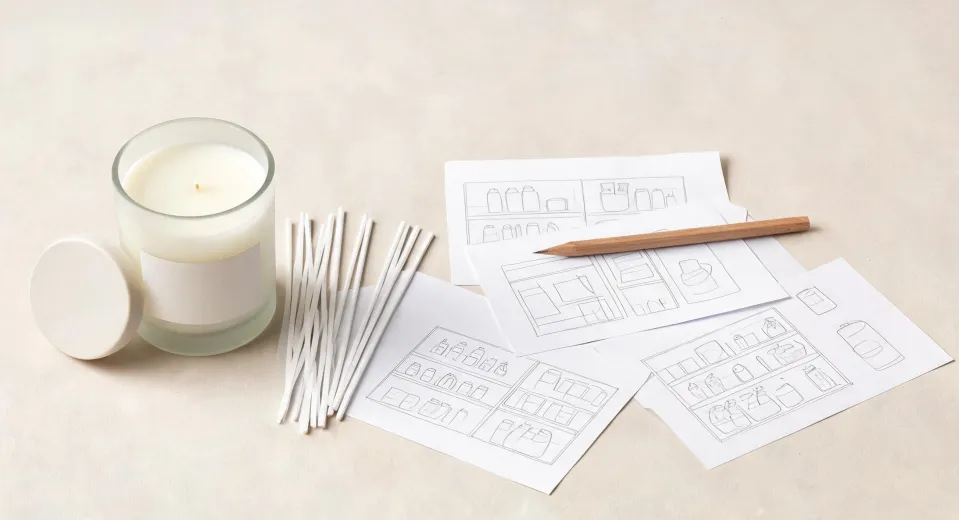
The order Karen placed was exactly what we do well: 120 personalized picture frames, each engraved with the couple's name and the wedding date, plus 120 scented candles from our home fragrance line. The frames were designed to double as place-card holders at the reception. The candles carried the same label design. Total order value: $3,900.
The wedding was April 20, 2024. Karen's initial email, sent at 10:14 AM on February 12, mentioned the date in the third sentence. That gave us 68 days of lead time. Standard production: 5–7 business days for the frames. The candles needed 48 hours to cure after pouring. Shipping to the Hill Country: 5–7 business days. Every number said this would be an easy, comfortable deadline.
Except the deadline was never actually written down where it mattered.
Two Assumptions, Both Wrong
Assumption number one: once I'd read the date, it would survive into the order notes. It didn't. I saw "April 20," mentally filed it under "spring," and typed "deliver by late April" into our production system. Karen said April. I heard "has time." We were using the same words but meaning different things — the gap surfaced on April 15, when it was too late to be useful.
Assumption number two: a street address is the same as a delivery plan. Karen gave us the resort's street address in Dripping Springs. The shipping label looked complete: street, city, ZIP. But there was no receiving contact. No attention line. No event coordinator's name. Just the resort's main office.
I'd been shipping custom products for six years by then. Our own training manual says: "If it's a venue, get a receiving name." I skipped it because the order was smooth, the client was friendly, and the address looked finished. I clicked approve.
The Crate Arrived. Nobody Knew What It Was.
The frames were engraved earlier than expected because the queue was light that week. The candles were poured in small batches to keep the tops even. We shipped on March 28 — a 38-pound crate, signature required. The tracking estimate: April 3–5. On April 3, the status pinged: "Delivered. Signed by M. Alvarez. Main office." I saw the green checkmark and closed the tab.
Twelve days passed.
On April 15, my phone rang. It was Karen.
"Hi, it's Karen Reyes. I called the resort to confirm the favors, and they said nothing has arrived. The wedding is Saturday."
I pulled up the tracking while she was still on the line. Delivered April 3. Signed by M. Alvarez. Main office. Then I called the resort. The receptionist remembered the crate. It had arrived with no contact name, so staff placed it in a utility closet. Later, a temp cleaned the closet, and the crate was moved to a back dock. Nobody opened it. Nobody knew it was for the Reyes wedding.
The crate was probably still there. "Probably" is the word that changes everything.
We had five days until April 20. Standard production for 120 engraved frames: five to seven business days. The math didn't close, and we both knew it.
What People Get Wrong About Rush Fees
I hear the objection from clients constantly: "Rush is just a markup. Same product, same shop. Why would it cost more?"
The assumption is that rush fees exist because the work is harder. The reality is that rush fees exist because the work is disruptive. Express production doesn't make engraving more difficult — it breaks the queue. The laser engraver can handle one job at a time. When your order jumps the line, someone else's gets pushed back. Overnight shipping costs more because it consumes a different kind of capacity. The fee isn't buying speed. It's buying predictability — yours, and everyone else's already in line.
I gave Karen two options. Option A: file a claim with the carrier, try to pull the original crate off the back dock, and hope it survived the storage shuffle. Maybe we'd find it. Maybe the frames would be unscratched. Maybe the candles would be undamaged. Three "maybe's" and a wedding on the line.
Option B: re-produce the order on express — engraving in 48 hours, candles prioritized, overnight shipping — with a guaranteed delivery date of April 18. The extra cost: about $400. That's March 2024 pricing; current rush rates are on our quote sheet.
I told Karen the truth. "Option A might work out. I just can't say that with the word 'guarantee.'" She chose Option B. It was a value decision, not a price decision.
The Second Crate
The express run went into production that same afternoon. I called the resort's senior event coordinator myself — Alexis, who picked up on the second ring. We confirmed the receiving point: the bridal suite in the resort's main building, signature required, and a direct call to Alexis the moment the driver set the crate down.
The second crate shipped April 17. It landed at 10:42 AM on April 18. Alexis texted me a photo of the crate sitting in the bridal suite. Karen didn't cry, but she came close.
The wedding happened. The place-card frames were on the tables. The candles went home with the guests. Weeks later, Karen sent a photo from the reception and a bottle of wine. The bottle is still on my desk, empty, but I keep it as a reminder.
The original crate surfaced in May, discovered by housekeeping in a back corridor. We offered to cover the return shipping if the resort donated the contents to a charity auction. I hope someone is enjoying a picture frame engraved with someone else's wedding date.
To be fair, Karen had a role in the mix-up too. She found us through a name collision, and the invoice said "Mariposa" clearly on every page. But she hired us to handle the details. And the date was in my inbox — I just didn't transfer it. The details are our job.
The Checklist That Caught 47 Errors
After that week, our pre-shipment checklist grew a fourth item. It now reads:
- Exact event date in the order notes — not "April." The number.
- Receiving contact at the venue — name, phone, and confirmation they're expecting it.
- Post-signature path — where does the package go after delivery?
- Proof matches every event detail — including the date and name spelling.
In the 18 months since, that checklist has caught 47 potential errors. Most were date mismatches. One was a Saturday delivery to an empty venue. Catching those in the notes is a lot cheaper than catching them on the phone.
So when clients ask whether rush delivery is worth it, I tell them the story of the second crate. The $400 was never about speed. It was about certainty — the difference between knowing exactly where 120 picture frames were and hoping they'd turn up. For a wedding, a conference, a product launch: the guaranteed date is the entire product.
An uncertain cheap option is the most expensive thing you can buy.
One last thing. A lot of the searches that land people here include "what is the best paint by number company," usually from someone planning favors or a group activity. I get the appeal: paint-by-number kits are creative, personal, and memorable. But for a date-hard event, they carry the same risk Karen and I walked into. You can't guarantee when guests finish them, and you can't guarantee what the finished result looks like. If you want the favor table to look like the picture in your head, choose a gift whose outcome is as predictable as its delivery.
The frames and candles are still in our catalog. The checklist is on the wall in our shipping area. And the rush fee is a budget line, not a moral failure. That's the whole story.

Elise Laurent is a crystal and decorative glass quality analyst covering crystal figurines, vases, ornaments, suncatchers, and gift glassware. She examines ISO 6486-1 where food-contact glass dinnerware applies, then uses polarized strain inspection, dimensional checks, surface-defect grading, and refractive clarity to compare decorative pieces outside that scope. Her work helps sourcing teams choose materials, finishing routes, and protective packaging without confusing visual brilliance with verified durability.