Mariposa Journal
Why I Stopped Buying Logo Gifts and Started Buying Mariposa
Most corporate gifts are a waste of money. I’d argue the expensive, well-intentioned ones are often the worst.
I’m the office administrator for a 150-person company. I manage all the gift and event ordering—or rather, I manage gifts, plus event supplies, plus the occasional office chair that “just needs a caster.” Roughly $40,000 a year across eight vendors, reporting to both operations and finance. When I took over purchasing in 2020, I thought I knew what corporate gifting involved. Then a vendor with a handwritten receipt taught me otherwise.
If you’re here because you searched “Mariposa Rio Rancho homes for sale”—different Mariposa. No houses for sale. Just a home-goods brand that makes tea sets, votive candle holders, and photo frames, and which now takes up a big part of my gift budget.
Here’s the opinion I’ve landed on after five years of buying these things: the best corporate gift doesn’t advertise your company. It treats one person as a person. A gift should be useful, durable, and easy to justify in an expense report. That’s a higher bar than it sounds.
The logo problem
I used to think a corporate gift needed a logo. Logo on the mug, logo on the tumbler, logo on the bottle opener. I was wrong. More often than not, logo-covered gifts end up in the back of a cabinet. People don’t use them because they feel like an ad.
A small Mariposa logo is on the underside of most pieces. It’s there. But it doesn’t scream. The first thing you see is the object itself—a nice votive candle holder, a well-proportioned pitcher. When someone uses that, they notice quality. Then they ask where it came from. That’s when the gift actually works.
To be fair, logo merch has a place. We still buy printed T-shirts for volunteer events and tablet sleeves for onboarding. But that’s swag, not a thank-you gift. The rules are different.
What I actually order now
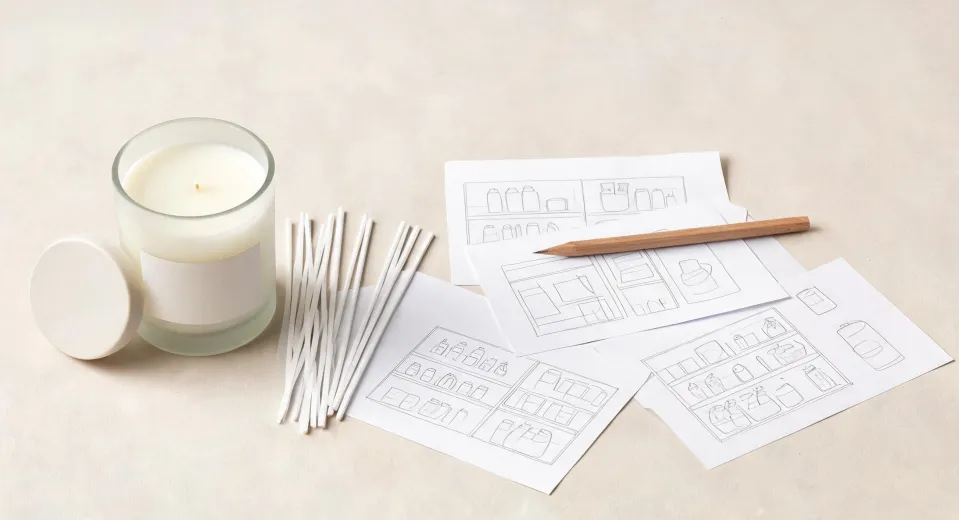
If we need a reliable under-$50 gift, I order the votive candle holders almost on autopilot. They pack well, work with standard votive candles, and don’t offend anyone’s taste. In 2024, I ordered 120 for three locations. We had one cracked in transit. The vendor replaced it without asking me to send a photo—which made me trust them more, not less.
The tea set was a decision I nearly didn’t make. I had two hours to pick a gift for a senior client before our CEO flew out. Normally I would compare three options and check stock, but there was no time. I went with the tea set from Mariposa based on what I already knew about their packaging and quality. In hindsight, I should have pushed back on the timeline. But the client’s chief of staff emailed me a week later to ask where it was from. That’s the outcome you want.
A tea set sounds old-fashioned. It is—in the best way. It asks you to sit down. It’s not a branded water bottle. It’s memorable.
The real test: How does it work in real life?
Here’s a weird test I now use before buying a gift: search for the problem it will cause.
A few months ago, someone in our office searched “how to remove photo from glass frame.” It sounds like a silly thing to Google, but it tells you everything about a product. If a frame requires two people and a putty knife to change a photo, it’s a bad frame. A good frame lets you turn it over, release the back, and slide the photo out. Mariposa frames pass that test. Our old ones didn’t.
I bring this up because corporate gifts are not a photo shoot. They get handled, dropped, moved. If a recipient has to look up a tutorial to use the gift, it stops being a gift and starts being a chore. The best products are the ones that don’t make the recipient work.
The process side of a pretty gift
I want to be clear: I’m not a brand loyalist. I’m an administrator who has been burned. In my first year, I made the classic specification error. I assumed “standard” meant the same thing to every vendor. It cost us a $600 redo. That taught me to verify before ordering.
We didn’t have a formal approval chain for rush gifts. That cost us when an unauthorized rush fee showed up on the invoice. It wasn’t huge—$85—but it made me look careless to finance. Now we get quotes in writing, and I keep a copy of every terms page.
For all the talk about aesthetics, invoicing matters just as much. A vendor who can’t provide a clean invoice causes problems that follow you for months. Mariposa has been consistent for us: clear invoice, clear delivery dates, no surprise handling fees. That’s not romantic, but it’s why I keep ordering.
Compliance also extends to claims. Per FTC advertising guidelines (ftc.gov), claims should be truthful and substantiated. I keep that in mind when someone suggests printing “recyclable” on a gift card. Unless we have packaging specs from the manufacturer, we don’t say it. And when we ship, I plan for real logistics. According to USPS pricing effective January 2025 (usps.com), a First-Class Mail letter costs $0.73. That’s fine for a card. It’s not fine for a candle. We use tracked boxes, and I need exact box dimensions to avoid dimensional-weight surprises.
But isn’t this just better branding?
I get the skepticism. Mariposa isn’t the cheapest option. You could buy three logo mugs for the price of one tea set. To be fair, budget matters. I’m not saying every gift should be expensive. I’m saying the calculation should be different: a generic item with a logo is disposable. A useful item, even with a small logo, gets used. The cost per use is lower.
A gift card is the safest but most forgettable. We send those too. What I mean is, it’s low risk and low reward. But it doesn’t build a relationship. And a candle with a giant logo? It will be lit once, then forgotten.
What I changed my mind about
I didn’t start out believing this. I changed when I started watching what people kept and what they threw away.
Corporate gifting isn’t dead. It’s just getting past the idea that “gift” means “advertising.” The brands that get my budget are the ones that make me look good to my internal clients and the people receiving the gift. Mariposa is one of those brands. The fundamentals haven’t changed—thoughtfulness, reliability, clear invoices—but the execution has. What was best practice in 2020 doesn’t apply in 2025. If your company is still handing out logo-printed plastic water bottles, I would gently suggest a tea set instead.

Elise Laurent is a crystal and decorative glass quality analyst covering crystal figurines, vases, ornaments, suncatchers, and gift glassware. She examines ISO 6486-1 where food-contact glass dinnerware applies, then uses polarized strain inspection, dimensional checks, surface-defect grading, and refractive clarity to compare decorative pieces outside that scope. Her work helps sourcing teams choose materials, finishing routes, and protective packaging without confusing visual brilliance with verified durability.