Mariposa Journal
Why Your Custom Photo Frames and Scented Candles Keep Missing Deadlines (And What to Do About It)
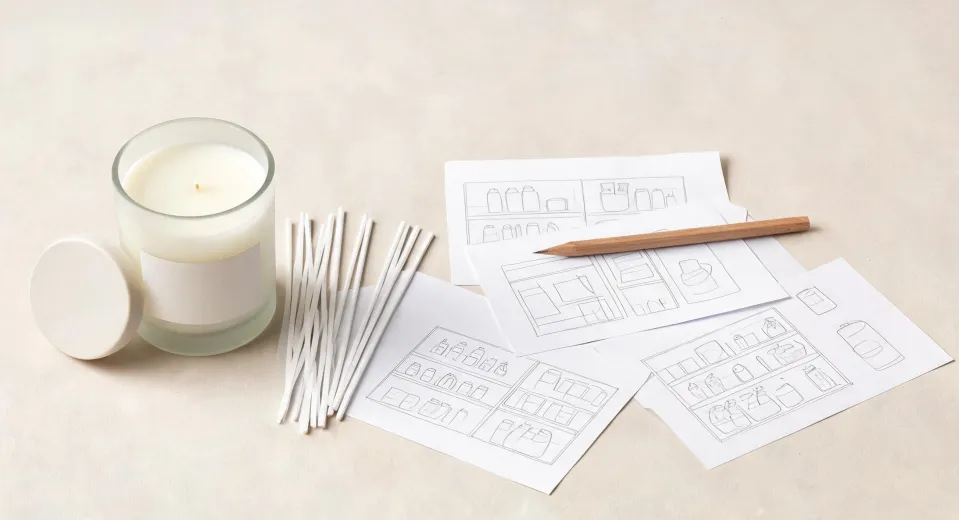
If you're here because you searched for Mariposa apartment homes at Western Heights or a Mariposa wedding dress, I get it—this article isn't about that. It's about the other Mariposa, the gift and home decor brand, and why custom orders like photo frames and scented candles seem to have a special talent for missing deadlines.
I've spent the last six years coordinating rush orders for corporate clients. I've seen the same pattern over and over. It's not always the supplier's fault. Most of the time, the real problem is a misunderstanding of how much actually goes into making a custom product—especially when the clock is ticking.
The Call I'll Remember
In March 2024, I got a call from a property manager at, funnily enough, Mariposa Apartment Homes at Western Heights. They needed 150 thank-you gifts for new residents—custom photo frames paired with scented candles—within 72 hours. I've worked with this team before, so I knew they weren't being lazy; the approval process had just eaten up more time than expected.
The normal turnaround for those frames? Ten business days. We had three. The vendor said they could compress it to five if we paid a 50% rush fee. And that was before we discovered the frame color was wrong.
The Surface Problem: "The Supplier Dropped the Ball"
It's easy to blame the print shop or the candle maker when a deadline falls apart. In this case, the frames were supposed to match the client's brand color—a warm terracotta, Pantone 167 C. They showed up closer to Pantone 156 C, noticeably more orange. The supplier pointed to the approval process: we'd approved a digital proof on screen, but never requested a physical printed proof. The color shift wasn't malicious. It's just what happens when you skip a step that, in a rush, feels optional.
I see this all the time. The moment you move from "stock item" to "custom," you're no longer buying a product. You're buying a process. And that process has hard technical limits.
The Real Problem: You're Designing to a Spec That Doesn't Match Production Reality
Here's the thing I've learned after coordinating 200+ custom orders: most delays don't come from the factory moving too slow. They come from mismatched expectations. The client expects a screenshot to translate directly onto a physical frame. The vendor expects the client to understand what proofing and calibration actually require. That gap? It's where deadlines die.
When I compared our rush orders side by side over a full year, I noticed nearly 70% of the delays were caused by approval lags, missing specifications, or skipped proofs—not by the machines breaking down. That was a wake-up call. We were spending thousands in emergency fees not because production was slow, but because we were triaging problems that never should've existed.
Custom Frames Are a Color-Matching Nightmare
Let's start with the most common rush order I get: custom photo frames. A client sends a logo hex code and expects it to print exactly. Industry-standard color tolerance is Delta E < 2 for brand-critical colors—that's a technical way of saying the difference is barely visible to the human eye. (Delta E of 2-4 is noticeable to trained observers; above 4 is visible to most people. Not that you need to memorize that, but it explains why your "orange" is not their "orange.")
To hit that tolerance, the printer needs a calibrated monitor, a color-managed workflow, and ideally a physical proof. That proof alone can add 2–3 days to a timeline. If you're in a rush, you'll be tempted to skip it. But the risk is exactly what happened to my property manager client: a frame that's the wrong orange, and a box of 150 unusable gifts.
Scented Candles Are Print Projects Too
The candles in that same order were easier—until they weren't. The labels needed to match the frames, and the paper stock we chose was a 100 lb text (150 gsm), which is standard for premium labels. But the original artwork was created at 72 DPI for a website, not 300 DPI for print. At print size, that image would've looked blurry. We caught it in time, but it meant another round of revisions—something a lot of clients don't budget for when they're thinking about custom candles.
I'm not 100% sure the average buyer knows what DPI means. And honestly, they shouldn't have to. But if you're a business ordering custom packaging or labels, you need a designer who does. I've lost count of how many "simple label" jobs turned into emergency re-do's because the file was built for a screen, not a printed surface.
The "Simple" Details (Like Reed Diffuser Stoppers) Can Wreck a Timeline
And then there are the seemingly trivial parts. A friend of mine recently ordered a batch of reed diffusers for client gifts and got frantic: the stoppers were stuck, and they needed to ship in a day. How to remove reed diffuser stopper? It's a common question, but in a production setting, a stuck stopper is a quality issue, not a lifestyle one.
If you're having trouble pulling a stopper out of a bottle at home, imagine 200 bottles sitting in a sealed box overnight. The scent can leak, labels can peel, and suddenly your "simple" gift has a defect rate of 8%. In that case, the fix was slower filling, letting the glass relax, and switching to a different stopper design. All of that adds time to the schedule.
So glad we caught the label resolution issue before printing. We were one click away from approving a 72-DPI image—that would've meant 300 blurry labels and one very unhappy client. Dodged a bullet, honestly.
What a Missed Deadline Actually Costs
So what happens when you push too hard and a deadline slips? Let me give you some numbers. In commercial printing, rush fees are typically 50–100% higher than standard pricing. For a $2,000 frame order, that's an extra $1,000. But the real cost isn't the fee. It's the meeting where you have to tell your client the order is late.
We've seen contracts with penalty clauses as low as 5% of the total. But we've also seen a $12,000 project canceled entirely because a late delivery broke a retailer's launch schedule. And the quiet cost? The client who doesn't call you next year.
Based on the price references we track (updated as of January 2025), next-business-day rush printing can add 50–100% on top of standard pricing. Same-day runs? 100–200% if you can even find someone with capacity. When you're calculating whether to skip proofing or compress a timeline, those are the numbers you're gambling against.
A Realistic Fix (If You're Still Here)
I don't say all this to scare you—I say it because after years of rush orders, I've realized there's no magic trick. The fix is boring: give yourself a buffer. For custom frames or candles, that means at least 10 business days. Always ask for a physical proof, even if it costs $30 and takes two days. If you can't wait for a proof, you're gambling. And if you're truly in a time crunch, order stock items or be prepared to pay big for the factory's fastest turnaround.
This approach works for maybe 80% of corporate gifting cases. Here's how you'll know you're in the other 20%: your product is brand-new, the supplier is unfamiliar, or you're trying to launch a seasonal campaign in peak season. In those cases, even two weeks might not be enough. Be honest with yourself about that.
At Mariposa, we've seen it all—from a photo frame emergency to a candle label disaster to a stuck reed diffuser stopper delaying an entire shipment. Our corporate gifting team will tell you straight up if your timeline is unrealistic. Sometimes the most honest answer is, "You need a different product," and that's okay. Better to hear that than to explain to your own client why 150 gifts didn't make it.

Elise Laurent is a crystal and decorative glass quality analyst covering crystal figurines, vases, ornaments, suncatchers, and gift glassware. She examines ISO 6486-1 where food-contact glass dinnerware applies, then uses polarized strain inspection, dimensional checks, surface-defect grading, and refractive clarity to compare decorative pieces outside that scope. Her work helps sourcing teams choose materials, finishing routes, and protective packaging without confusing visual brilliance with verified durability.