Mariposa Journal
What's a Great Executive or Corporate Gift? A Cost Controller's 7-Step Checklist
-
Before You Spend a Dollar on Executive Gifts, Read This
-
Step 1: Set a real per-gift budget (not just the unit price)
-
Step 2: Think about the recipient's context—not just their name
-
Step 3: Choose a category with broad appeal—home decor usually wins
-
Step 4: Ask about customization fees before you ask about discounts
-
Step 5: Calculate total cost of ownership (TCO) for every option
-
Step 6: Always get a physical sample—no exceptions
-
Step 7: Document every promise in writing
-
Step 1: Set a real per-gift budget (not just the unit price)
-
Common Mistakes and Extra Warnings
Before You Spend a Dollar on Executive Gifts, Read This
If you're a procurement manager or executive assistant tasked with finding corporate gifts for a client appreciation event, a holiday gesture, or a new partner welcome—this checklist is for you. I manage client and vendor gifts for a 60-person B2B services company, and I've tracked roughly $180,000 in spending on corporate gifts over the past 6 years. Along the way, I've made plenty of mistakes.
When I first started, I assumed the cheapest option was always the best. Three budget overruns later, I learned about total cost of ownership (TCO). So let's skip the pain and go straight to the workable process.
Step 1: Set a real per-gift budget (not just the unit price)
Before you look at a single product, define what "the cost" means. A $50 candle holder isn't $50 if you need custom engraving, individual gift boxes, and rush shipping. Write down your total spendable amount per gift, including all add-ons.
Checkpoint: Your budget should include:
- Base product price
- Customization or personalization fees
- Packaging and inserts
- Shipping (especially if you're sending to multiple addresses)
- Tax and potential duties
Step 2: Think about the recipient's context—not just their name
I've seen great gifts fail because nobody considered the recipient's workspace or culture. A beautiful glass vase might not fly for a client in a highly casual startup; a desk calendar might feel too generic. Personalized gifts work better when they map to the person's actual interests or environment.
For example, Mariposa's home decor line—things like scented candles, small dinnerware sets, and photo frames—works broadly because it fits a home or office context. But don't take my word for it. Check your recipient list and note any dietary, cultural, or practical constraints.
Step 3: Choose a category with broad appeal—home decor usually wins
If you're buying for a group of people (say, 50 clients), you need something that doesn't polarize. In my experience, personalized home decor and elegant gift items are safer bets than tech gadgets or alcohol. Home decor is also less likely to be seen as a bribe or an inappropriate gift for government agencies.
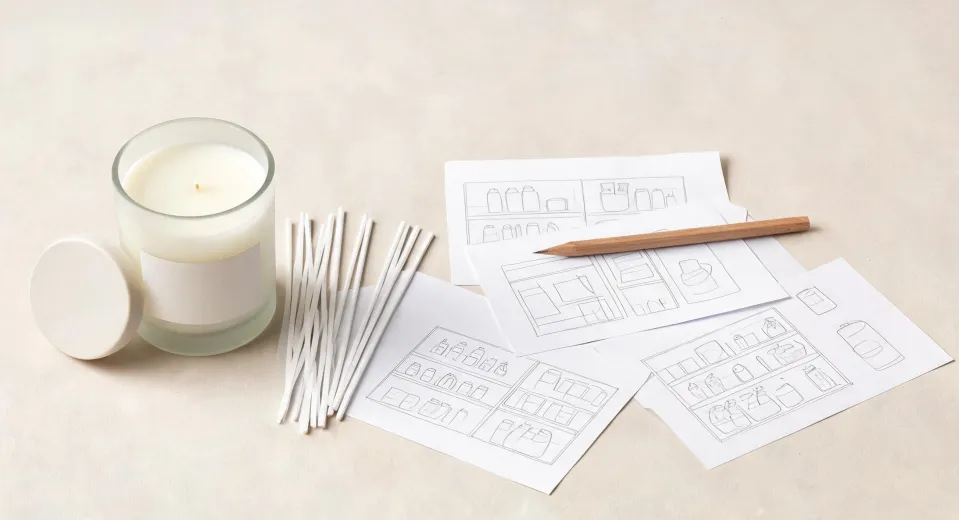
One category I consistently use is scented candles or candle holders. They're easy to package, don't require sizing, and most people can use them. Mariposa's candle holders are a good mid-tier option, but more on TCO later.
Step 4: Ask about customization fees before you ask about discounts
Here's where most people get burned—or rather, where I got burned my first year. A vendor quotes you a low per-unit price, then adds a setup fee, a die charge, an art revision fee, or a minimum order quantity that makes the total cost absurd. I've seen a "free setup" offer turn out to be $450 more in hidden fees.
Watchlist: Ask every shortlisted vendor:
- What is the art setup fee?
- Is there a proof approval fee?
- How many design revisions are included?
- What if I need to change an order after production starts?
Step 5: Calculate total cost of ownership (TCO) for every option
In Q2 2024, I compared two vendors for a 200-piece order. Vendor A quoted $32 per unit plus a one-time $600 setup. Vendor B quoted $28 per unit with supposedly "no setup fee." Guess what? Vendor B's packaging and pallet shipping added $1,200 that wasn't itemized in the original quote. TCO was $7,000 for Vendor A and $7,600 for Vendor B.
That's a 9% difference hidden in fine print. To be fair, Vendor B's packaging was nicer. But the quote didn't say I'd be paying extra for it.
Use the same logic for your corporate gifts. Calculate the full cost for the entire order, not just the per-item price.
Step 6: Always get a physical sample—no exceptions
Everything I'd read about large orders said samples are optional if the vendor has good reviews. In practice, I received a batch of 150 "wooden" photo frames that were actually a cheap MDF core with a wood-print veneer. We had to redo the whole order—$1,200 in rework that a $30 sample would have caught.
5 minutes of verification beats 5 days of correction. If a vendor won't send a sample, consider that a red flag.
Step 7: Document every promise in writing
I know this sounds like Procurement 101—well, it is, but you'd be surprised how often conversations happen over the phone or email with "we'll take care of it." Then the order arrives late, and the vendor says they never promised that. A simple cost tracking sheet—vendor, quote date, delivery date, per-unit cost, TCO—saves your team from arguments later.
After tracking 200+ orders, I found that most budget overruns came from undocumented verbal agreements. Now our policy requires quotes from 3 vendors minimum and a written summary from each.
Common Mistakes and Extra Warnings
Here are a few things people forget until it's too late:
- Shipping costs matter. According to USPS pricing effective January 2025, a First-Class Mail letter costs $0.73, but a large envelope is $1.50 plus $0.28 for each additional ounce. If your gift is a candle holder in a box, you're likely looking at Priority Mail flat-rate pricing. Factor that into your per-gift budget.
- Green claims need proof. If you're considering gifts marketed as "eco-friendly" or "recyclable," remember the FTC Green Guides. You need to be able to substantiate those claims. For example, "recyclable" means the item is recyclable in places where at least 60% of consumers have access. If your vendor doesn't have documentation, don't repeat the claim.
- Don't confuse Mariposa the brand with Mariposa the town. If you landed here searching for "cheap homes for sale in Mariposa" or "Mariposa homes for rent," you're on the wrong page—but since you're here, remember that great corporate gifts matter too. And if your gift is for a new homeowner, home decor from Mariposa might just be the personalized gift you need.
The bottom line: the best executive or corporate gift idea is one that fits your budget, respects the recipient, and comes with zero surprises. Use this checklist, get samples, and always calculate TCO before signing off. It's the cheapest insurance you'll ever buy.

Elise Laurent is a crystal and decorative glass quality analyst covering crystal figurines, vases, ornaments, suncatchers, and gift glassware. She examines ISO 6486-1 where food-contact glass dinnerware applies, then uses polarized strain inspection, dimensional checks, surface-defect grading, and refractive clarity to compare decorative pieces outside that scope. Her work helps sourcing teams choose materials, finishing routes, and protective packaging without confusing visual brilliance with verified durability.