Mariposa Journal
Mariposa Gift & Decor FAQ: Candles in Mason Jars, Photo Books, and the Name Confusion
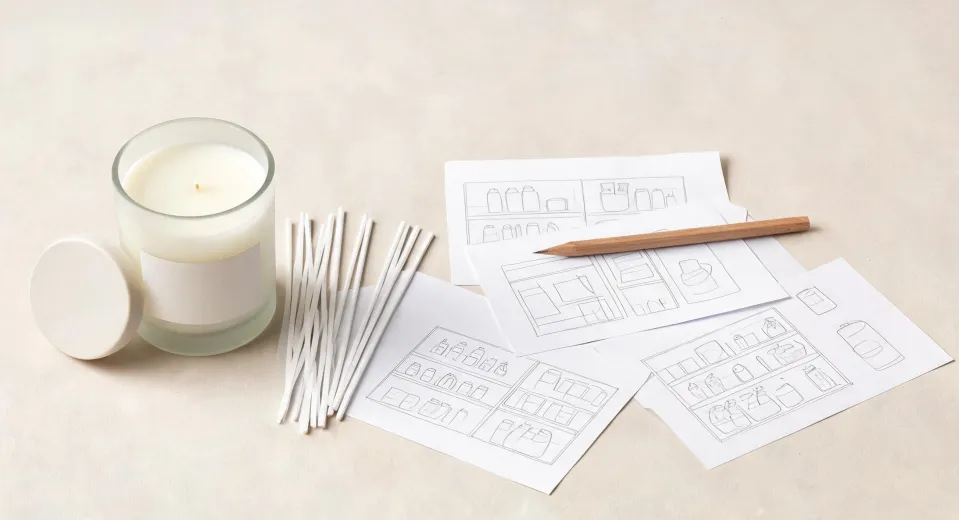
Every week, someone finds us while searching for something else. Mariposa is a town in California, a recovery home, and a rental listing. It’s also the name of our gift company. I’m the quality manager here, and I’ve spent the last four years making sure every candle, frame, and photo book that leaves our warehouse actually meets the spec. Here are the questions I’ve answered more times than I can count—plus a few I wish you’d ask.
Are you the Mariposa recovery home or the rental homes in Mariposa?
No—we’re Mariposa the gift and home decor company. I get why you might land here, though. The name is shared by a recovery home and a bunch of rental listings in Mariposa, California. We make scented candles, candle holders, dinnerware, photo frames, and personalized corporate gifts.
If you’re looking for homes for rent in Mariposa or a recovery home, this isn’t that. If you were searching for “homes for rent Mariposa” specifically, you might be looking for real estate—not gifts. But if you need a thoughtful gift for someone moving into a new place—or for the staff at a recovery home—we can help. We’ve done both. So no, we’re not a sober living facility. But we do understand the power of a name.
Can you burn a candle in a mason jar?
Short answer: it depends. A standard Mason jar isn’t made to handle the heat of a candle. I’ve seen jars crack from thermal shock—not in our facility, but I’ve heard enough stories. Actually, I did see one crack in our testing lab when we were evaluating a supplier’s glass. That’s why we only use heat-tempered glass for our candles.
The risk with regular mason jars is uneven heating. The glass might be fine for canning, but a candle flame concentrates heat in one spot. What’s the worst case? A cracked jar and a fire on your coffee table. The upside of mason jars—they’re cheap and photogenic—wasn’t worth the risk for us. Our candle holders are tested to withstand full candle burn times without cracking. In the lab, we use a thermocouple to monitor surface temperature. If you’re burning a candle in a jar at home, check that the label says heat-resistant or tempered. Don’t just trust the Pinterest photo.
What picture frames and photo books do you offer?
We’ve got a range of frames—modern metal, classic wood, even some with leather inlays. Our photo books come in a few sizes, but here’s where I sound like a quality person: the frame matters less than what’s inside it. Actually, both matter. But a beautiful frame with a blurry print won’t do anyone any good.
For print, the industry standard is 300 DPI. A 4x6 image needs at least 1200x1800 pixels. If you’re scanning old photos, aim for that resolution or you’ll see the difference. Our photo books use 100 lb text paper—that’s 150 gsm—which gives a premium feel. Budget books often use 80 lb text (120 gsm). You can feel the difference even before you open the cover. (Should mention: our most popular size is 8x10, which works well for coffee tables. A 12x12 layout is better for landscapes or family reunions.)
How do you make sure every product meets your standard?
That’s my entire job. I review every deliverable—or at least a statistically solid sample—before it reaches customers. In the last year, I’ve rejected about 6% of first deliveries due to spec mismatches. I do verify every spec that matters. In Q1 2024, we received a batch of 500 candle holders where the paint was visibly off: a slight yellow tint instead of our standard warm gray. Normal tolerance is Delta E < 2, which is barely noticeable to trained observers. The vendor claimed it was “within industry standard.” We rejected the batch, and they redid it at their cost. Now every contract includes exact Pantone specifications.
I don’t have hard data on industry-wide defect rates, but based on our five years of orders, my sense is quality issues affect roughly 8-12% of first deliveries. The most frustrating part: the same issues recurring despite clear communication. You’d think written specs would prevent misunderstandings, but interpretation varies wildly. That’s why we verify, and why we build in a tolerance for certain specs. It’s a constant balance between cost and consistency.
Is a $20 photo book worth it?
If you’re printing a family keepsake, probably not. I ran a blind test with our team last year: same photo book, cheap matte paper vs premium glossy. If I remember correctly, about 70% identified the premium as “more professional” without knowing which was which. The cost increase was about $3 per book. On a 200-book order, that’s $600 for measurably better perception.
But here’s the thing—price isn’t the only signal. Some premium books use thick paper but skip color calibration. Always ask for a proof copy before committing to a large run. That’s the one piece of advice I wish more customers followed. I still kick myself for not proofing a batch of 200 company photo books years ago. The colors came out slightly blue, and we ended up redoing the whole run at our cost. A $20 proof would have caught it.
Aren’t there hidden fees when ordering custom gifts?
There can be, and I’ve been burned by that before. One of my biggest regrets: not asking about setup fees with a previous vendor. We received a low quote, then the final invoice had plate making, proofing, and a “color correction” fee that didn’t exist anywhere in the original contract. That invoice came in $22,000 over our estimate. Since then, I’ve learned to ask “what’s NOT included” before “what’s the price.”
The vendor who lists all fees upfront—even if the total looks higher—usually costs less in the end.
At Mariposa, we list every fee upfront: setup, Pantone matching, die cutting, rush orders. You’ll see all of it before you sign. Setup fees in commercial printing typically range from $15-50 per color for offset plate making, and die cutting can be $50-200 depending on complexity. Rush fees are where it hurts: next business day adds 50-100% over standard pricing. Based on publicly listed prices at online printers, this was accurate as of January 2025. Prices change, so always confirm current rates before budgeting.

Elise Laurent is a crystal and decorative glass quality analyst covering crystal figurines, vases, ornaments, suncatchers, and gift glassware. She examines ISO 6486-1 where food-contact glass dinnerware applies, then uses polarized strain inspection, dimensional checks, surface-defect grading, and refractive clarity to compare decorative pieces outside that scope. Her work helps sourcing teams choose materials, finishing routes, and protective packaging without confusing visual brilliance with verified durability.